
In today's dynamic and competitive business environment, continuous professional development is crucial for both individual growth and organizational success. One of the most effective methods for evaluating and enhancing professional skills is through Workplace Based Assessments (WBAs). These assessments provide a structured approach to evaluating an employee's performance in real-time, offering valuable insights into their strengths and areas for improvement. This blog post will delve into the importance of WBAs, their various types, implementation strategies, and best practices for maximizing their effectiveness.
Understanding Workplace Based Assessments
Workplace Based Assessments are evaluations conducted in the actual work environment to assess an employee's competencies, skills, and behaviors. Unlike traditional assessments that often rely on theoretical knowledge, WBAs focus on practical application and real-world performance. This approach ensures that the evaluation is relevant, accurate, and directly applicable to the employee's job role.
WBAs are particularly valuable in fields that require hands-on skills, such as healthcare, engineering, and education. They help in identifying gaps in knowledge and skills, providing targeted training and development opportunities, and ensuring that employees are well-prepared to handle their responsibilities effectively.
Types of Workplace Based Assessments
There are several types of Workplace Based Assessments, each designed to evaluate different aspects of an employee's performance. Some of the most common types include:
- Direct Observation of Procedural Skills (DOPS): This assessment involves observing an employee performing a specific procedure or task. It is commonly used in healthcare settings to evaluate clinical skills.
- Case-Based Discussion (CBD): In this type of assessment, the employee is presented with a case scenario and asked to discuss their approach to managing the situation. It is often used in fields like medicine and law.
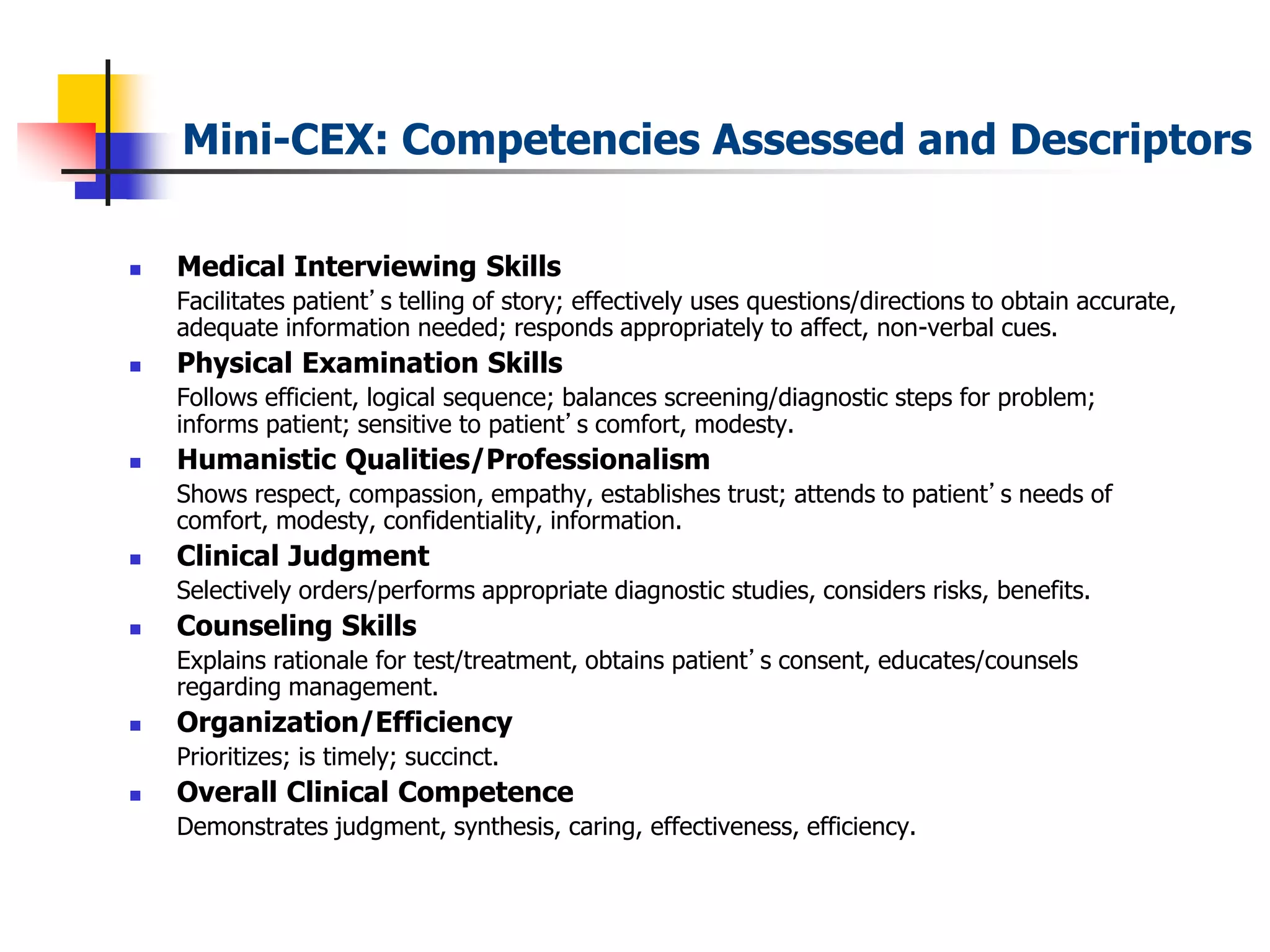
- Mini-Clinical Evaluation Exercise (Mini-CEX): This assessment involves a brief, structured evaluation of an employee's clinical skills during a patient encounter. It is widely used in medical education.
- Multi-Source Feedback (MSF): Also known as 360-degree feedback, this assessment gathers input from multiple sources, including colleagues, supervisors, and subordinates, to provide a comprehensive evaluation of an employee's performance.
- Portfolio-Based Assessment: This involves collecting and evaluating a portfolio of an employee's work over a period. It is useful for assessing long-term projects and continuous improvement.
Implementing Workplace Based Assessments
Implementing Workplace Based Assessments requires careful planning and execution. Here are the key steps to follow:
1. Define Clear Objectives
Before implementing WBAs, it is essential to define clear objectives. What specific skills or competencies do you want to assess? What are the desired outcomes of the assessment? Clear objectives will guide the entire process and ensure that the assessments are aligned with organizational goals.
2. Choose the Right Assessment Tools
Select the assessment tools that best fit your objectives and the nature of the work. For example, if you are assessing clinical skills, DOPS or Mini-CEX might be appropriate. If you are evaluating leadership skills, MSF could be more suitable.
3. Train Assessors
Assessors play a crucial role in the success of WBAs. Ensure that they are well-trained in the assessment tools and techniques. They should understand the criteria for evaluation and be able to provide constructive feedback.
4. Conduct the Assessments
Schedule the assessments at convenient times and ensure that the environment is conducive to accurate evaluation. Provide clear instructions to the employees being assessed and ensure that they understand the purpose and process of the assessment.
5. Provide Feedback
After the assessments, provide timely and constructive feedback to the employees. Highlight their strengths and areas for improvement, and offer suggestions for development. Feedback should be specific, actionable, and focused on growth.
6. Monitor and Evaluate
Continuously monitor the effectiveness of the WBAs and evaluate their impact on employee performance and organizational goals. Make necessary adjustments to the assessment process based on feedback and outcomes.
📝 Note: It is important to ensure that the assessment process is fair, unbiased, and transparent. Employees should feel comfortable and supported throughout the process.
Best Practices for Effective Workplace Based Assessments
To maximize the effectiveness of Workplace Based Assessments, consider the following best practices:
- Align Assessments with Organizational Goals: Ensure that the assessments are aligned with the organization's strategic objectives and the specific needs of the employees.
- Use Multiple Assessment Tools: Combine different types of assessments to get a comprehensive view of an employee's performance. For example, use DOPS for clinical skills and MSF for leadership skills.
- Provide Regular Feedback: Regular feedback helps employees understand their strengths and areas for improvement, fostering continuous development.
- Encourage Self-Assessment: Encourage employees to self-assess their performance and set their own development goals. This promotes self-awareness and ownership of their professional growth.
- Create a Supportive Environment: Ensure that the assessment environment is supportive and non-threatening. Employees should feel comfortable sharing their thoughts and receiving feedback.
Challenges and Solutions in Workplace Based Assessments
While Workplace Based Assessments offer numerous benefits, they also come with challenges. Understanding these challenges and finding effective solutions is crucial for successful implementation.
1. Bias and Subjectivity
Assessments can be influenced by bias and subjectivity, leading to inaccurate evaluations. To mitigate this, ensure that assessors are well-trained and use standardized criteria for evaluation. Regularly review and update the assessment tools to minimize bias.
2. Time and Resource Constraints
Conducting WBAs can be time-consuming and resource-intensive. To address this, prioritize assessments based on their importance and impact. Use technology to streamline the assessment process and reduce administrative burden.
3. Resistance to Change
Employees may resist changes in the assessment process, especially if they are accustomed to traditional methods. To overcome this, communicate the benefits of WBAs clearly and involve employees in the planning and implementation process. Provide training and support to help them adapt to the new system.
4. Lack of Standardization
Without standardized assessment tools and criteria, it can be challenging to compare performance across different employees or departments. Develop standardized assessment tools and ensure that all assessors are trained to use them consistently.
📝 Note: Regularly review and update the assessment process to address emerging challenges and ensure its continued effectiveness.
Case Studies: Successful Implementation of Workplace Based Assessments
Several organizations have successfully implemented Workplace Based Assessments to enhance employee performance and organizational effectiveness. Here are a few case studies:
Healthcare Sector
In the healthcare sector, WBAs are widely used to evaluate clinical skills and competencies. For example, a large hospital implemented DOPS and Mini-CEX to assess the performance of its medical residents. The assessments provided valuable insights into the residents' clinical skills and areas for improvement, leading to targeted training and development programs. As a result, the hospital saw a significant improvement in patient outcomes and resident satisfaction.
Engineering Sector
In the engineering sector, a leading engineering firm used MSF to evaluate the leadership and project management skills of its engineers. The assessments gathered feedback from colleagues, supervisors, and subordinates, providing a comprehensive view of each engineer's performance. Based on the feedback, the firm developed personalized development plans for each engineer, leading to improved project outcomes and enhanced team collaboration.
Education Sector
In the education sector, a university implemented portfolio-based assessments to evaluate the teaching effectiveness of its faculty members. The assessments involved collecting and evaluating a portfolio of teaching materials, student feedback, and self-reflections. The process provided valuable insights into the faculty members' teaching methods and areas for improvement, leading to enhanced teaching practices and improved student learning outcomes.
Future Trends in Workplace Based Assessments
As organizations continue to evolve, so do the methods and tools for Workplace Based Assessments. Some of the emerging trends in WBAs include:
- Technology Integration: The use of technology, such as mobile apps and digital platforms, is making WBAs more efficient and accessible. These tools enable real-time assessments, data collection, and feedback.
- Data Analytics: Data analytics is being used to analyze assessment data and identify trends, patterns, and areas for improvement. This helps organizations make data-driven decisions and enhance the effectiveness of their assessment processes.
- Gamification: Gamification techniques are being incorporated into WBAs to make the assessment process more engaging and motivating. This can include elements like points, badges, and leaderboards to encourage participation and continuous improvement.
- Virtual and Augmented Reality: Virtual and augmented reality technologies are being used to create immersive assessment environments. This allows employees to practice and be assessed in realistic scenarios, enhancing the accuracy and relevance of the assessments.
These trends are shaping the future of Workplace Based Assessments, making them more effective, engaging, and aligned with the evolving needs of organizations and employees.
📝 Note: Staying updated with the latest trends and technologies in WBAs can help organizations enhance their assessment processes and achieve better outcomes.
Conclusion
Workplace Based Assessments are a powerful tool for evaluating and enhancing employee performance in real-world settings. By providing a structured approach to assessing practical skills and competencies, WBAs help organizations identify areas for improvement, develop targeted training programs, and foster continuous professional development. Implementing WBAs requires careful planning, training, and continuous evaluation, but the benefits are well worth the effort. As organizations continue to evolve, so will the methods and tools for WBAs, ensuring that they remain relevant and effective in enhancing employee performance and organizational success.
Related Terms:
- rcpsych workplace based assessments
- workplace based assessment mrcpsych
- workplace based assessment medical education
- workplace based assessment tools
- what are work based assessments
- workplace based assessment australia