
Learning Spanish verb conjugations can be both challenging and rewarding. Among the various verb tenses and moods, the subjunctive mood is particularly intriguing. One of the key aspects of the subjunctive mood is the Venir Subjunctive Conjugation. This conjugation is essential for expressing actions that are uncertain, hypothetical, or subjective. Understanding how to conjugate "venir" in the subjunctive mood will significantly enhance your ability to communicate in Spanish.
Understanding the Subjunctive Mood
The subjunctive mood is used to express a wide range of emotions, doubts, wishes, and possibilities. It is often triggered by certain conjunctions and expressions that indicate uncertainty or subjectivity. For example, phrases like “es posible que” (it is possible that), “espero que” (I hope that), and “dudo que” (I doubt that) often require the use of the subjunctive mood.
The Verb “Venir”
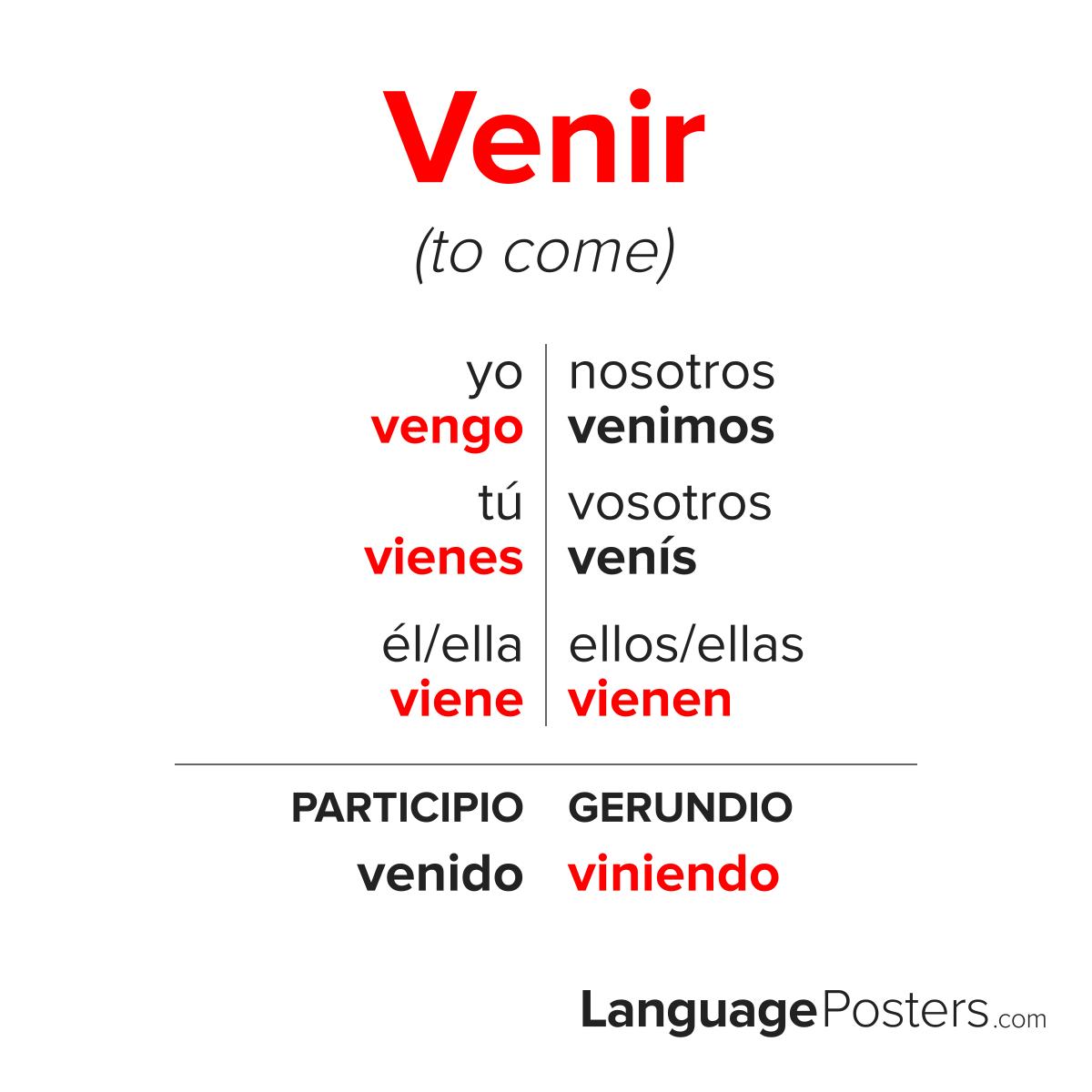
The verb “venir” means “to come” in English. It is a regular verb in the present indicative tense, but like all verbs, it has its own set of conjugations in the subjunctive mood. Mastering the Venir Subjunctive Conjugation is crucial for expressing future actions, invitations, and other subjective statements.
Conjugating “Venir” in the Subjunctive Mood
To conjugate “venir” in the subjunctive mood, you need to understand the different tenses within the subjunctive. The most commonly used tenses are the present subjunctive and the imperfect subjunctive. Let’s break down each of these tenses.
Present Subjunctive
The present subjunctive is used to express actions that are happening now or will happen in the future, depending on certain conditions. Here is the conjugation of “venir” in the present subjunctive:
| Subject Pronoun | Conjugation |
|---|---|
| yo | venga |
| tú | vengas |
| él/ella/usted | venga |
| nosotros/nosotras | vengamos |
| vosotros/vosotras | vengáis |
| ellos/ellas/ustedes | vengan |
For example, you might say "Espero que vengas a la fiesta" (I hope that you come to the party). Here, "vengas" is the present subjunctive form of "venir" for the subject "tú."
Imperfect Subjunctive
The imperfect subjunctive is used to express actions that were happening in the past or would have happened under certain conditions. Here is the conjugation of “venir” in the imperfect subjunctive:
| Subject Pronoun | Conjugation |
|---|---|
| yo | viniera |
| tú | vinieras |
| él/ella/usted | viniera |
| nosotros/nosotras | viniéramos |
| vosotros/vosotras | vinierais |
| ellos/ellas/ustedes | vinieran |
For example, you might say "Dudaba que viniera a la reunión" (I doubted that he/she would come to the meeting). Here, "viniera" is the imperfect subjunctive form of "venir" for the subject "él/ella/usted."
Common Uses of the Subjunctive Mood
The subjunctive mood is used in a variety of contexts. Here are some common situations where you might use the Venir Subjunctive Conjugation:
- Expressing Doubt or Uncertainty: When you are unsure about something, you use the subjunctive. For example, "No sé si venga mañana" (I don't know if he/she will come tomorrow).
- Expressing Wishes or Desires: When you hope for something to happen, you use the subjunctive. For example, "Espero que vengas a cenar" (I hope that you come to dinner).
- Expressing Emotions: When you express emotions like joy, sadness, or surprise, you use the subjunctive. For example, "Me alegra que vengas a visitarme" (I am glad that you come to visit me).
- Expressing Necessity or Obligation: When you express that something is necessary or obligatory, you use the subjunctive. For example, "Es necesario que vengas temprano" (It is necessary that you come early).
Understanding these contexts will help you use the Venir Subjunctive Conjugation more effectively in your Spanish conversations.
📝 Note: The subjunctive mood can be tricky, especially for English speakers who are not used to expressing uncertainty and subjectivity in this way. Practice with examples and sentences to get a better feel for when to use the subjunctive.
Practice Exercises
To solidify your understanding of the Venir Subjunctive Conjugation, it’s essential to practice. Here are some exercises to help you get started:
- Conjugate "venir" in the present subjunctive for each subject pronoun.
- Conjugate "venir" in the imperfect subjunctive for each subject pronoun.
- Create sentences using the present subjunctive form of "venir" to express doubt, wishes, emotions, and necessity.
- Create sentences using the imperfect subjunctive form of "venir" to express past doubts, wishes, emotions, and necessity.
By practicing these exercises, you will become more comfortable with the Venir Subjunctive Conjugation and be able to use it more naturally in your Spanish conversations.
📝 Note: Remember that practice is key to mastering any language skill. Don't be discouraged if it takes time to get the hang of the subjunctive mood. Keep practicing, and you will see improvement.
Mastering the Venir Subjunctive Conjugation is a significant step in your journey to fluency in Spanish. By understanding the different tenses and contexts in which the subjunctive mood is used, you will be able to express a wide range of emotions, doubts, and possibilities more effectively. Keep practicing, and soon you will be using the subjunctive mood with confidence.
Related Terms:
- decir subjunctive conjugation
- estar subjunctive conjugation
- llegar subjunctive conjugation
- venir present subjunctive conjugation
- ser subjunctive conjugation
- venir subjunctive conjugation spanish