
In the realm of scientific inquiry, variables in science play a pivotal role in understanding and explaining natural phenomena. Whether you are a seasoned researcher or a curious student, grasping the concept of variables is essential for conducting experiments, analyzing data, and drawing meaningful conclusions. This post delves into the fundamentals of variables in science, their types, and their significance in various scientific disciplines.
Understanding Variables in Science
Variables in science are elements that can change or vary within an experiment or study. They are crucial for establishing cause-and-effect relationships and for testing hypotheses. Understanding variables helps scientists design experiments that yield reliable and reproducible results.
Types of Variables in Science
Variables in science can be categorized into several types, each serving a unique purpose in experimental design. The primary types include:
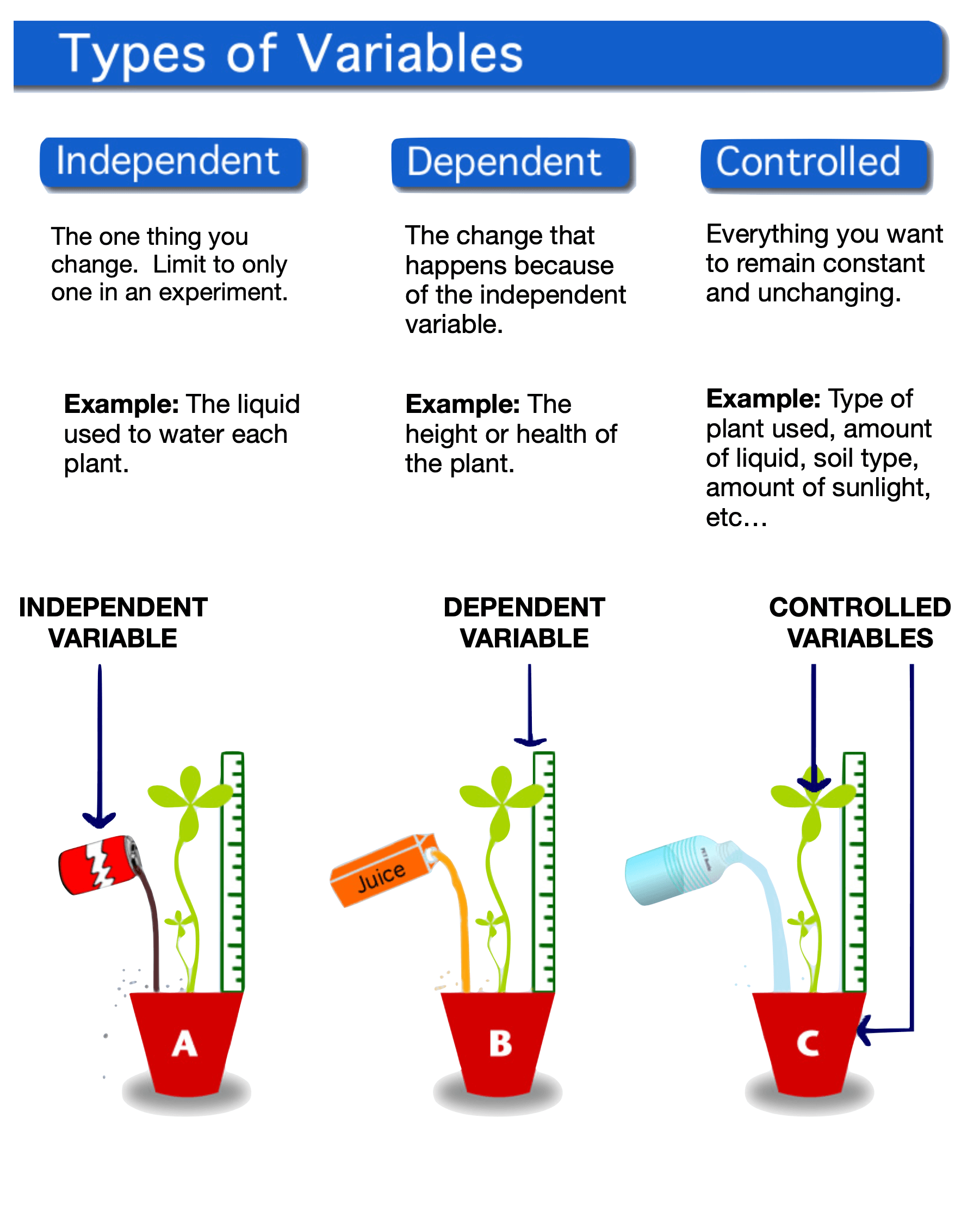
- Independent Variables: These are the variables that the researcher manipulates or controls to observe their effect on other variables. For example, in a study on plant growth, the amount of water given to the plants would be the independent variable.
- Dependent Variables: These are the variables that are measured or observed to see how they respond to changes in the independent variable. In the plant growth study, the height of the plants would be the dependent variable.
- Control Variables: These are variables that are kept constant to ensure that the changes observed in the dependent variable are solely due to the independent variable. In the plant growth study, factors like soil type and light exposure would be control variables.
- Extraneous Variables: These are variables that are not the focus of the study but can still affect the results. Researchers aim to minimize the influence of extraneous variables to ensure the validity of their findings.
Importance of Variables in Scientific Research
Variables in science are essential for several reasons:
- Establishing Cause and Effect: By manipulating independent variables and observing changes in dependent variables, scientists can establish cause-and-effect relationships. This is fundamental for understanding how different factors interact and influence outcomes.
- Testing Hypotheses: Variables allow scientists to test hypotheses by systematically changing one variable and observing the effects on others. This process helps in validating or refuting scientific theories.
- Data Analysis: Variables provide the data points necessary for statistical analysis. By analyzing the relationships between variables, scientists can draw conclusions and make predictions.
- Reproducibility: Well-defined variables ensure that experiments can be replicated by other researchers, leading to consistent and reliable results.
Variables in Different Scientific Disciplines
Variables in science are used across various disciplines, each with its unique set of variables and methodologies. Here are a few examples:
Physics
In physics, variables often represent physical quantities such as mass, velocity, and acceleration. For example, in Newton's second law of motion (F = ma), force (F) is the dependent variable, mass (m) is the independent variable, and acceleration (a) is the control variable.
Chemistry
In chemistry, variables can include temperature, pressure, and concentration. For instance, in a study on the rate of a chemical reaction, the concentration of reactants might be the independent variable, while the rate of reaction is the dependent variable.
Biology
In biology, variables can range from genetic sequences to environmental factors. For example, in a study on the effects of a new drug, the dosage of the drug would be the independent variable, and the health outcomes of the subjects would be the dependent variable.
Psychology
In psychology, variables can include cognitive abilities, emotional states, and behavioral responses. For instance, in a study on the effects of stress on memory, the level of stress would be the independent variable, and memory performance would be the dependent variable.
Designing Experiments with Variables
Designing a scientific experiment involves carefully selecting and controlling variables to ensure valid and reliable results. Here are the steps to design an experiment with variables:
- Identify the Research Question: Clearly define the question you want to answer with your experiment.
- Formulate a Hypothesis: Based on your research question, formulate a testable hypothesis.
- Select Variables: Identify the independent, dependent, and control variables for your experiment.
- Design the Experiment: Plan how you will manipulate the independent variable and measure the dependent variable. Ensure that control variables are kept constant.
- Collect Data: Conduct the experiment and collect data on the dependent variable.
- Analyze Data: Use statistical methods to analyze the data and determine if there is a significant relationship between the variables.
- Draw Conclusions: Based on your analysis, draw conclusions about the relationship between the variables and whether your hypothesis is supported.
📝 Note: It is crucial to document every step of the experiment, including the selection and control of variables, to ensure reproducibility and transparency.
Common Challenges with Variables
While variables are essential for scientific research, they also present several challenges:
- Confounding Variables: These are extraneous variables that can affect the dependent variable, making it difficult to isolate the effect of the independent variable. Researchers must identify and control for confounding variables to ensure valid results.
- Measurement Error: Inaccurate measurement of variables can lead to erroneous conclusions. It is important to use reliable and valid measurement tools and techniques.
- Sample Size: The number of observations or participants in an experiment can affect the reliability of the results. A small sample size may not provide enough data to draw meaningful conclusions.
- Statistical Significance: Determining whether the observed effects are statistically significant is crucial. Researchers use statistical tests to assess the likelihood that the results are due to chance.
Examples of Variables in Scientific Studies
To illustrate the use of variables in scientific studies, let's consider a few examples:
Example 1: Effect of Fertilizer on Plant Growth
| Variable Type | Description |
|---|---|
| Independent Variable | Type and amount of fertilizer |
| Dependent Variable | Plant height and biomass |
| Control Variables | Soil type, watering schedule, light exposure |
| Extraneous Variables | Temperature, humidity, pests |
Example 2: Impact of Exercise on Mental Health
| Variable Type | Description |
|---|---|
| Independent Variable | Frequency and intensity of exercise |
| Dependent Variable | Mood and stress levels |
| Control Variables | Diet, sleep patterns, social interactions |
| Extraneous Variables | Weather, personal events, medication |
These examples demonstrate how variables are used to design and conduct experiments in different scientific disciplines. By carefully selecting and controlling variables, researchers can gain insights into complex phenomena and contribute to the advancement of knowledge.
In the realm of scientific inquiry, variables in science play a pivotal role in understanding and explaining natural phenomena. Whether you are a seasoned researcher or a curious student, grasping the concept of variables is essential for conducting experiments, analyzing data, and drawing meaningful conclusions. This post delves into the fundamentals of variables in science, their types, and their significance in various scientific disciplines.
In conclusion, understanding variables in science is fundamental for conducting rigorous and meaningful scientific research. By carefully selecting and controlling variables, researchers can establish cause-and-effect relationships, test hypotheses, and draw reliable conclusions. Whether in physics, chemistry, biology, or psychology, variables are the backbone of scientific inquiry, enabling us to explore the complexities of the natural world and make significant advancements in knowledge.
Related Terms:
- what does variables mean scientifically
- 3 main variables in science
- definition of variables science
- example of variables in science
- 3 variables in an experiment
- meaning of variables in science