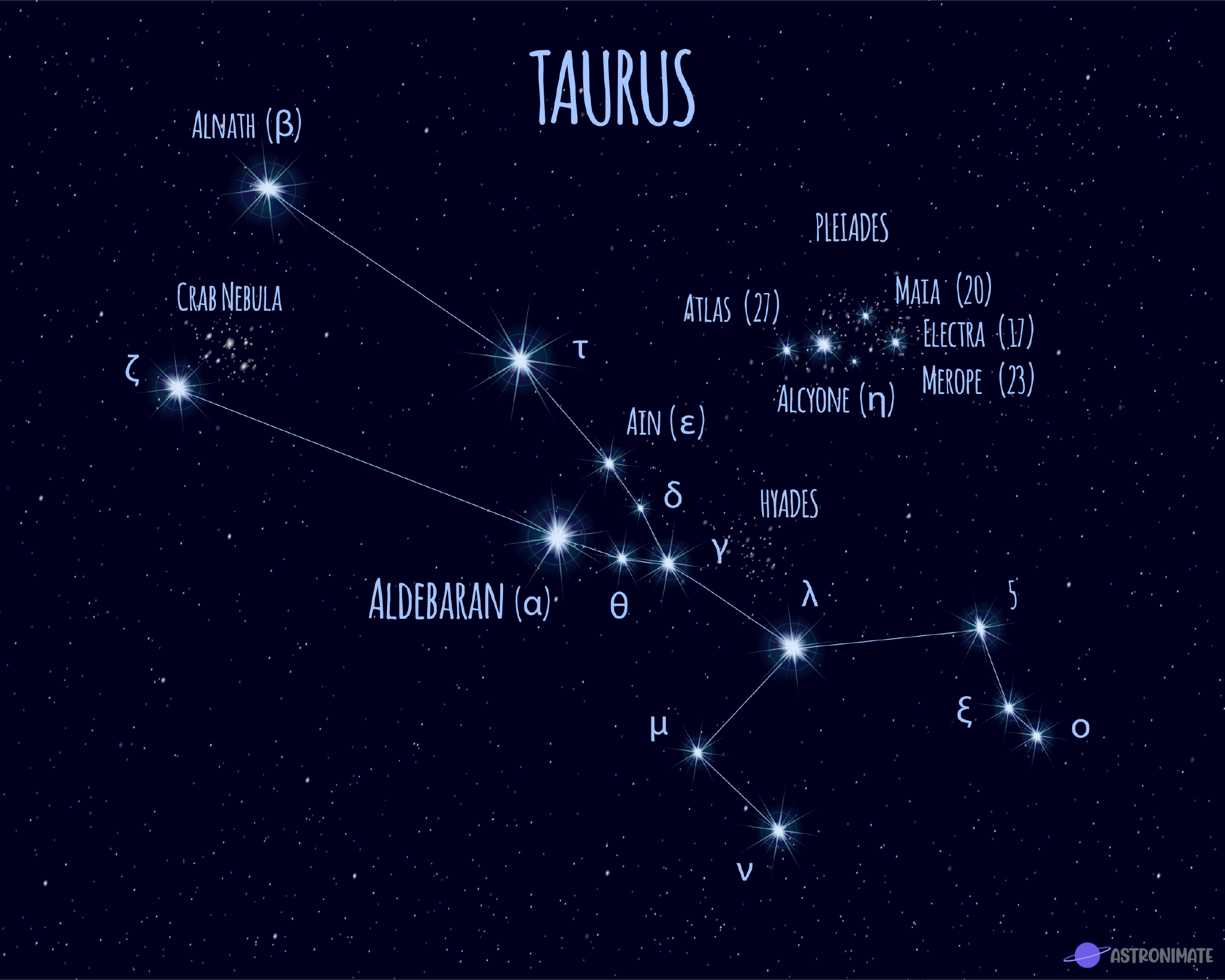

The night sky has always been a source of fascination and wonder for humanity. Among the myriad of constellations that adorn the celestial canvas, the Taurus Star Constellation stands out as one of the most recognizable and significant. Located in the northern hemisphere, Taurus is the 17th largest constellation and is easily identifiable by its distinctive shape and prominent stars. This constellation is not only a marvel to observe but also holds deep cultural and astronomical significance.
The Mythology Behind Taurus
The Taurus Star Constellation is steeped in mythology, with various cultures attributing different stories to its origins. In Greek mythology, Taurus is often associated with the myth of Zeus and Europa. According to the legend, Zeus, in the form of a bull, abducted Europa and carried her across the sea to Crete. The constellation is said to represent the bull that Zeus transformed into. This mythological connection adds a layer of intrigue and cultural richness to the Taurus constellation, making it a favorite among stargazers and mythology enthusiasts alike.
Key Stars in the Taurus Constellation
The Taurus Star Constellation is home to several notable stars that contribute to its distinctive appearance. Among these, Aldebaran and the Pleiades star cluster are particularly prominent.
Aldebaran
Aldebaran, also known as Alpha Tauri, is the brightest star in the Taurus constellation. It is an orange giant star located approximately 65 light-years away from Earth. Aldebaran is easily visible to the naked eye and serves as a key reference point for identifying the constellation. Its name translates to "the follower" in Arabic, referring to its position following the Pleiades star cluster across the sky.
The Pleiades Star Cluster
The Pleiades, also known as the Seven Sisters, is one of the most famous star clusters in the night sky. Located within the Taurus constellation, the Pleiades consists of several hundred stars, although only a handful are visible to the naked eye. This cluster is a popular target for amateur astronomers and is often depicted in art and literature due to its beauty and cultural significance. The Pleiades are estimated to be around 444 light-years away from Earth and are part of the Taurus-Auriga star-forming region.
Observing the Taurus Constellation
Observing the Taurus Star Constellation can be a rewarding experience for both novice and experienced stargazers. The constellation is best viewed during the winter months in the northern hemisphere, particularly in December and January. To locate Taurus, look for the distinctive "V" shape formed by its brightest stars, with Aldebaran marking one end of the "V." The Pleiades star cluster can be found near the shoulder of the bull, adding to the constellation's visual appeal.
For those interested in deeper observation, a pair of binoculars or a small telescope can reveal additional details within the Taurus constellation. The Pleiades star cluster, in particular, benefits from magnification, allowing viewers to see more of its individual stars and the nebulosity surrounding them. Additionally, the Crab Nebula, a supernova remnant, is located within the boundaries of Taurus and can be observed with a telescope.
Cultural Significance of Taurus
The Taurus Star Constellation holds significant cultural importance across various civilizations. In ancient Egyptian mythology, Taurus was associated with the goddess Hathor, who was often depicted with the horns of a cow. The constellation was also important in ancient Mesopotamian culture, where it was known as the "Bull of Heaven" and was associated with the god Enlil. In Chinese astronomy, Taurus is part of the "White Tiger" constellation, one of the Four Symbols representing the cardinal directions.
In astrology, Taurus is the second sign of the zodiac, representing those born between April 20 and May 20. Individuals born under this sign are often associated with traits such as stability, reliability, and a love for luxury. The Taurus constellation's association with the bull symbolizes strength and endurance, qualities that are reflected in the characteristics attributed to those born under this sign.
Scientific Significance of Taurus
Beyond its cultural and mythological significance, the Taurus Star Constellation also holds scientific importance. The constellation is home to several notable celestial objects that have been the subject of extensive astronomical research. One such object is the Crab Nebula, a supernova remnant located about 6,500 light-years away from Earth. The Crab Nebula is the result of a supernova explosion observed in 1054 AD and is a popular target for astronomers studying the life cycles of stars.
Additionally, the Taurus constellation contains several molecular clouds and star-forming regions, making it a valuable area of study for astronomers interested in stellar evolution. The Taurus-Auriga star-forming region, which includes the Pleiades star cluster, is one of the nearest and most active star-forming regions to Earth, providing insights into the processes that lead to the formation of new stars and planetary systems.
🌟 Note: The Taurus constellation's proximity to the ecliptic plane makes it a frequent target for occultations, where planets or the Moon pass in front of stars within the constellation. These events provide valuable opportunities for astronomers to study the atmospheres of planets and the dynamics of celestial bodies.
Taurus in Modern Astronomy
In modern astronomy, the Taurus Star Constellation continues to be a subject of interest and study. Advances in telescope technology and imaging techniques have allowed astronomers to observe the constellation in greater detail than ever before. High-resolution images of the Pleiades star cluster and the Crab Nebula have revealed intricate structures and phenomena that were previously unknown.
Moreover, the Taurus constellation is a popular target for amateur astronomers and astrophotographers. Its prominent stars and star clusters make it an ideal subject for capturing stunning images of the night sky. The constellation's visibility during the winter months also makes it a favorite for stargazing events and public outreach programs, where enthusiasts can gather to observe and learn about the wonders of the cosmos.
One of the most notable features of the Taurus constellation is its association with the Taurid meteor shower. This annual meteor shower occurs in late October and early November and is believed to be associated with the debris left behind by Comet Encke. The Taurids are known for their slow-moving meteors, which can produce bright fireballs and are often visible from both the northern and southern hemispheres.
Observing the Taurid meteor shower is a great way to appreciate the dynamic nature of the Taurus constellation and its role in the broader celestial landscape. The shower provides an opportunity to witness the interaction between comets, asteroids, and the Earth's atmosphere, offering a glimpse into the complex processes that shape our solar system.
In addition to the Taurid meteor shower, the Taurus constellation is also associated with the Beta Taurid meteor shower, which occurs in late June and early July. This shower is less well-known than the Taurids but still offers a chance to observe meteors originating from the Taurus constellation.
Taurus and the Zodiac
The Taurus Star Constellation plays a crucial role in astrology as one of the twelve zodiac signs. In astrological terms, Taurus is associated with the element of Earth and is ruled by the planet Venus. Individuals born under the Taurus sign are often characterized by traits such as practicality, determination, and a love for beauty and comfort. The constellation's association with the bull symbolizes strength, endurance, and a grounded approach to life.
In astrology, the position of the Sun in the Taurus constellation during a person's birth is believed to influence their personality and life path. Those born between April 20 and May 20 are considered Taurus natives and are thought to embody the qualities associated with this sign. Astrologers often use the Taurus constellation as a reference point for interpreting horoscopes and providing guidance on various aspects of life, including relationships, career, and personal growth.
While astrology is not considered a science, it remains a popular and enduring practice that continues to captivate people around the world. The Taurus constellation's role in astrology adds an additional layer of fascination and intrigue, making it a subject of interest for both believers and skeptics alike.
In conclusion, the Taurus Star Constellation is a treasure trove of astronomical wonders and cultural significance. From its mythological origins to its prominent stars and star clusters, Taurus offers a wealth of opportunities for observation and study. Whether you are a seasoned astronomer or a casual stargazer, the Taurus constellation provides a captivating glimpse into the mysteries of the night sky. Its association with the zodiac and its role in astrology further enhance its appeal, making it a beloved and enduring symbol of the cosmos.
Related Terms:
- bull with stars inside
- where is taurus constellation tonight
- star map of taurus
- where is taurus located
- taurus constellation astrology
- taurus constellation mythology