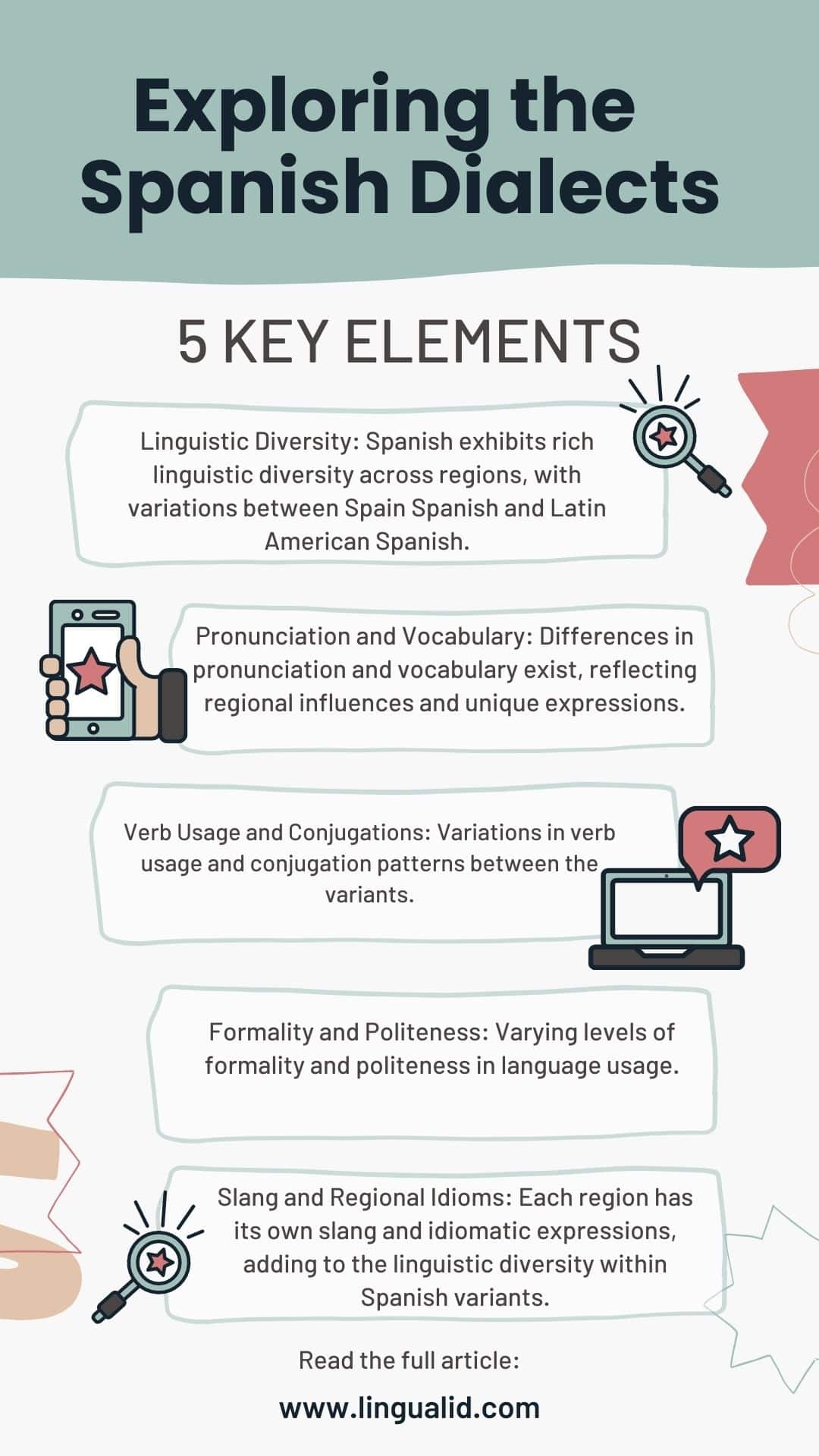

Spain, a country rich in history and culture, is also a linguistic treasure trove. The Spain language dialects are as diverse as the landscapes that span from the Pyrenees to the Mediterranean coast. Understanding these dialects provides a deeper appreciation for the country's cultural tapestry and the nuances that make each region unique.
The Official Language: Spanish
The official language of Spain is Spanish, also known as Castilian. It is the most widely spoken language in the country and serves as a unifying force among its diverse regions. Spanish is a Romance language that evolved from Vulgar Latin, the language of the Roman Empire. It is characterized by its phonetic spelling, which makes it relatively easy to learn for those familiar with Latin-based languages.
Spanish is not only the official language but also the lingua franca of many Spanish-speaking countries around the world. It is the second most spoken native language in the world, with over 460 million speakers globally. This widespread use makes Spanish a crucial language for international communication and diplomacy.
Regional Dialects of Spain
While Spanish is the official language, Spain is home to several regional languages and dialects that reflect the country's rich cultural heritage. These dialects are not merely variations of Spanish but are distinct languages with their own grammar, vocabulary, and cultural significance.
Catalan
Catalan is one of the most prominent regional languages in Spain. It is spoken in Catalonia, Valencia, and the Balearic Islands. Catalan has a long history dating back to the Middle Ages and has influenced the literature, art, and music of these regions. It is a Romance language with roots in Latin, similar to Spanish, but with significant differences in vocabulary and grammar.
Catalan has its own literary tradition, with notable authors such as Joanot Martorell and Ramon Llull. The language has also played a crucial role in the political and cultural identity of Catalonia, particularly during the period of Franco's dictatorship, when its use was suppressed.
Galician
Galician is spoken in the northwestern region of Galicia. It is closely related to Portuguese and shares many similarities in vocabulary and grammar. Galician has a rich literary tradition and is recognized as an official language in Galicia alongside Spanish. The language has been influenced by both Celtic and Germanic languages, reflecting the region's historical ties to both cultures.
Galician is known for its melodic sound and is often described as a language of poetry and song. It has a strong presence in the region's cultural life, with festivals, literature, and music all contributing to its preservation and promotion.
Basque
The Basque language, or Euskara, is one of the most unique and intriguing languages in Spain. It is spoken in the Basque Country and Navarre, and it is not related to any other known language. Basque is a language isolate, meaning it has no known linguistic relatives. This makes it a subject of great interest for linguists and language enthusiasts alike.
Basque has a complex grammar and a rich vocabulary, with many words that have no equivalents in other languages. It has been preserved through generations despite historical pressures to assimilate into Spanish. Today, efforts are being made to revitalize the language, with Basque being taught in schools and used in official capacities.
Valencian
Valencian is a dialect of Catalan spoken in the Valencian Community. It is recognized as an official language alongside Spanish and shares many similarities with Catalan. However, Valencian has its own unique features and is considered a distinct language by its speakers. The language has a rich literary tradition and is an essential part of the region's cultural identity.
Valencian is known for its distinctive pronunciation and vocabulary, which sets it apart from other dialects of Catalan. It is used in education, media, and official documents, ensuring its continued use and preservation.
Aranese
Aranese is a dialect of Occitan spoken in the Val d'Aran, a small valley in the Pyrenees. It is one of the least spoken languages in Spain but holds significant cultural importance for the region. Aranese has been influenced by both French and Spanish, reflecting the valley's geographical location and historical ties.
The language is recognized as an official language in the Val d'Aran and is used in education and media. Efforts are being made to preserve and promote Aranese, ensuring that it continues to be a vital part of the region's cultural heritage.
Other Minority Languages
In addition to the major regional languages, Spain is home to several minority languages and dialects. These include Asturian, spoken in the Asturias region, and Aragonese, spoken in the Aragon region. These languages have smaller speaker populations but are nonetheless important to the cultural identity of their respective regions.
Asturian, also known as Bable, is a Romance language with roots in Latin. It has a rich literary tradition and is used in education and media in the Asturias region. Aragonese, on the other hand, is a Romance language closely related to Spanish but with significant differences in vocabulary and grammar.
The Influence of Spain Language Dialects on Culture
The diversity of Spain language dialects has had a profound impact on the country's culture. Each language and dialect carries with it a unique set of traditions, customs, and values that contribute to the rich tapestry of Spanish culture. From literature and music to art and cuisine, the regional languages have shaped the cultural landscape of Spain in countless ways.
For example, Catalan literature has produced some of the most renowned authors in Spain, including Joanot Martorell and Ramon Llull. Galician poetry and song have a melodic quality that is distinct from other Spanish-language traditions. Basque art and music reflect the unique cultural identity of the Basque people, while Valencian cuisine is renowned for its distinctive flavors and ingredients.
These cultural expressions are not only a source of pride for the regions but also a means of preserving and promoting their languages. Festivals, literary events, and cultural celebrations play a crucial role in keeping these languages alive and vibrant.
Challenges and Preservation Efforts
Despite their cultural significance, many of Spain's regional languages face challenges in terms of preservation and promotion. Historical pressures, such as the suppression of languages during Franco's dictatorship, have had a lasting impact on their use and vitality. Today, efforts are being made to revitalize these languages through education, media, and cultural initiatives.
One of the key challenges is the dominance of Spanish as the official language. While Spanish serves as a unifying force, it can also overshadow the regional languages, leading to a decline in their use. To address this, many regions have implemented bilingual education programs, where both Spanish and the regional language are taught in schools. This ensures that children grow up with a strong foundation in both languages.
Media also plays a crucial role in promoting these languages. Radio and television stations broadcast in regional languages, and there are numerous publications and websites dedicated to preserving and promoting them. These efforts help to keep the languages alive and relevant in the modern world.
Cultural initiatives, such as festivals and literary events, are another important aspect of language preservation. These events celebrate the unique cultural heritage of each region and provide a platform for the languages to be used and appreciated. They also foster a sense of pride and identity among speakers, encouraging them to pass the language on to future generations.
In addition to these efforts, there are also legal protections in place to safeguard the regional languages. The Spanish Constitution recognizes the right of all citizens to use their own language, and many regions have their own language laws that promote and protect their languages. These legal frameworks provide a solid foundation for language preservation and promotion.
Despite these challenges and efforts, the future of Spain's regional languages looks promising. With continued support and dedication, these languages can thrive and continue to enrich the cultural landscape of Spain.
📚 Note: The preservation of regional languages is not only about maintaining linguistic diversity but also about preserving the cultural heritage and identity of the regions.
In conclusion, the Spain language dialects are a testament to the country’s rich cultural heritage and linguistic diversity. From the official language of Spanish to the regional languages of Catalan, Galician, Basque, Valencian, and Aranese, each language carries with it a unique set of traditions, customs, and values. These languages have shaped the cultural landscape of Spain in countless ways, from literature and music to art and cuisine. While they face challenges in terms of preservation and promotion, efforts are being made to revitalize and protect them. Through education, media, cultural initiatives, and legal protections, these languages can continue to thrive and enrich the cultural tapestry of Spain.
Related Terms:
- list of spanish dialects
- spain dialects map
- most popular spanish dialects
- spanish dialects in spain
- different types of spanish dialects
- dialects spoken in spain