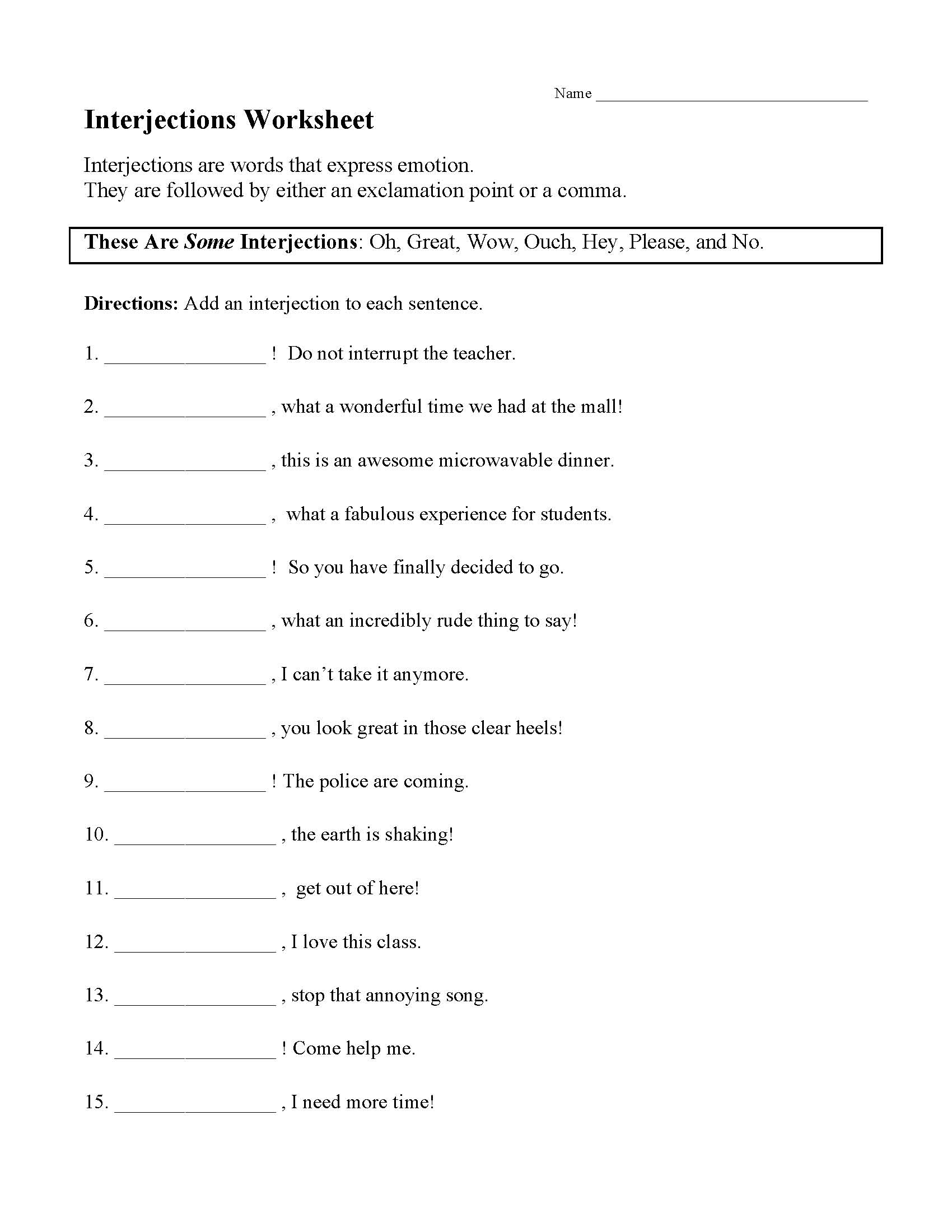

Language is a dynamic and expressive tool that allows us to convey a wide range of emotions and ideas. One of the most powerful elements of language is the use of interjections. A sentence with an interjection can add emphasis, convey strong emotions, and make communication more engaging. Understanding how to effectively use interjections can greatly enhance your writing and speaking skills.
What is an Interjection?
An interjection is a part of speech that expresses strong emotion or sudden reaction. It is often used to convey surprise, excitement, joy, or frustration. Interjections can stand alone or be integrated into a sentence. They are typically followed by an exclamation mark or a comma, depending on the context.
Types of Interjections
Interjections can be categorized into several types based on the emotion they convey. Here are some common types:
- Exclamatory Interjections: These express strong emotions such as surprise, joy, or anger. Examples include "Wow!", "Oh!", and "Yikes!"
- Greeting Interjections: These are used to greet someone. Examples include "Hello!", "Hi!", and "Hey!"
- Interjections of Agreement: These show agreement or acknowledgment. Examples include "Yes!", "Indeed!", and "Right!"
- Interjections of Disagreement: These show disagreement or disbelief. Examples include "No!", "Nonsense!", and "Rubbish!"
- Interjections of Pain or Discomfort: These express physical or emotional pain. Examples include "Ouch!", "Ack!", and "Yuck!"
Using Interjections in Sentences
A sentence with an interjection can be very effective in conveying emotions. Here are some examples of how interjections can be used in sentences:
- Wow! That was an amazing performance!
- Oh, I didn't see you there!
- Yikes! That was close!
- Hello! It's great to see you again.
- Yes, I agree with your point.
- No, that's not correct.
- Ouch! That hurt!
Interjections can also be used to add emphasis to a sentence. For example:
- Oh, how I wish I could go with you!
- Wow, that's a beautiful painting!
- Yikes, I can't believe I forgot my keys!
Interjections in Different Contexts
Interjections are versatile and can be used in various contexts, from casual conversations to formal writing. Here are some examples of how interjections can be used in different contexts:
Casual Conversations
In casual conversations, interjections are often used to express immediate reactions or emotions. For example:
- Oh, I love this song!
- Wow, that's a great idea!
- Yikes, I can't believe I missed the bus!
Formal Writing
In formal writing, interjections are used sparingly and typically to convey strong emotions or reactions. For example:
- Oh, what a beautiful day!
- Wow, that's an impressive achievement!
- Yikes, I can't believe I made such a mistake!
Literature
In literature, interjections are often used to add depth to characters and their emotions. For example:
- Oh, how I long for the days of my youth!
- Wow, that was a thrilling adventure!
- Yikes, I can't believe I survived that ordeal!
Common Interjections and Their Meanings
Here is a table of some common interjections and their meanings:
| Interjection | Meaning |
|---|---|
| Wow | Expresses surprise or admiration |
| Oh | Expresses surprise, realization, or disappointment |
| Yikes | Expresses fear, surprise, or shock |
| Hello | Used to greet someone |
| Yes | Expresses agreement or acknowledgment |
| No | Expresses disagreement or denial |
| Ouch | Expresses pain or discomfort |
💡 Note: Interjections can vary in meaning and usage depending on the context and cultural background. It's important to use them appropriately to convey the intended emotion.
Interjections in Different Languages
Interjections are not limited to English; they exist in many languages and often have unique cultural nuances. Here are some examples of interjections in different languages:
- Spanish: "¡Qué!" (What!), "¡Ay!" (Ouch!), "¡Hola!" (Hello!)
- French: "Oh là là!", "Zut!", "Ah bon!"
- German: "Ach!", "Oh je!", "Hallo!"
- Italian: "Oh mio Dio!", "Accidenti!", "Ciao!"
Interjections in Everyday Life
Interjections are an integral part of everyday communication. They help us express our feelings and reactions in a more vivid and immediate way. Here are some examples of how interjections are used in everyday life:
- When watching a movie: "Wow, that was an amazing scene!"
- When receiving good news: "Oh, that's fantastic!"
- When experiencing pain: "Ouch, that hurt!"
- When greeting a friend: "Hello, it's great to see you!"
- When disagreeing with someone: "No, I don't think that's right."
Interjections can also be used to add humor or lightheartedness to a conversation. For example:
- When joking around: "Oh, you're so funny!"
- When teasing a friend: "Yikes, you're in trouble now!"
Interjections in Writing
In writing, interjections can be used to create a more engaging and dynamic narrative. They can help to convey the emotions and reactions of characters, making the story more relatable and immersive. Here are some examples of how interjections can be used in writing:
- When describing a character's reaction: "Oh, how I wish I could go with you!"
- When conveying excitement: "Wow, that's an amazing discovery!"
- When expressing fear: "Yikes, I can't believe I'm in this situation!"
Interjections can also be used to add emphasis to a sentence. For example:
- Oh, how I long for the days of my youth!
- Wow, that's a beautiful painting!
- Yikes, I can't believe I made such a mistake!
Interjections can be used in various genres of writing, from fiction to non-fiction. They can help to create a more vivid and engaging narrative, making the story more memorable for the reader.
Interjections can also be used in dialogue to make conversations more realistic and engaging. For example:
- Character A: "Oh, I can't believe you did that!"
- Character B: "Wow, that was amazing!"
- Character C: "Yikes, I can't believe I'm in this situation!"
Interjections can also be used in descriptive writing to create a more immersive experience for the reader. For example:
- Oh, how the sun shines brightly today!
- Wow, that's a breathtaking view!
- Yikes, I can't believe I'm standing on top of this mountain!
Interjections can also be used in persuasive writing to add emphasis and conviction to an argument. For example:
- Oh, how I wish everyone could see the truth!
- Wow, that's a compelling argument!
- Yikes, I can't believe people still don't understand!
Interjections can also be used in academic writing to add a personal touch and make the writing more engaging. For example:
- Oh, how fascinating this research is!
- Wow, that's a groundbreaking discovery!
- Yikes, I can't believe I'm actually understanding this!
Interjections can also be used in technical writing to add clarity and emphasis to complex information. For example:
- Oh, how important it is to follow these steps!
- Wow, that's a complex process!
- Yikes, I can't believe I'm actually understanding this!
Interjections can also be used in creative writing to add a unique and personal touch to the narrative. For example:
- Oh, how I wish I could go with you!
- Wow, that's an amazing discovery!
- Yikes, I can't believe I'm in this situation!
Interjections can also be used in poetry to add rhythm and emotion to the verses. For example:
- Oh, how the moon shines brightly tonight!
- Wow, that's a beautiful sunset!
- Yikes, I can't believe I'm standing here!
Interjections can also be used in song lyrics to add emotion and depth to the music. For example:
- Oh, how I long for you!
- Wow, that's a beautiful melody!
- Yikes, I can't believe I'm singing this!
Interjections can also be used in speeches to add emphasis and conviction to the message. For example:
- Oh, how important it is to stand up for what we believe in!
- Wow, that's a powerful statement!
- Yikes, I can't believe we're actually doing this!
Interjections can also be used in presentations to add clarity and emphasis to the information being presented. For example:
- Oh, how important it is to follow these steps!
- Wow, that's a complex process!
- Yikes, I can't believe I'm actually understanding this!
Interjections can also be used in emails to add a personal touch and make the communication more engaging. For example:
- Oh, how I wish I could be there with you!
- Wow, that's an amazing opportunity!
- Yikes, I can't believe I'm actually doing this!
Interjections can also be used in social media posts to add emotion and depth to the content. For example:
- Oh, how I love this song!
- Wow, that's a beautiful photo!
- Yikes, I can't believe I'm actually doing this!
Interjections can also be used in text messages to add a personal touch and make the communication more engaging. For example:
- Oh, how I wish I could be there with you!
- Wow, that's an amazing opportunity!
- Yikes, I can't believe I'm actually doing this!
Interjections can also be used in instant messaging to add emotion and depth to the conversation. For example:
- Oh, how I love this song!
- Wow, that's a beautiful photo!
- Yikes, I can't believe I'm actually doing this!
Interjections can also be used in video calls to add emotion and depth to the conversation. For example:
- Oh, how I wish I could be there with you!
- Wow, that's an amazing opportunity!
- Yikes, I can't believe I'm actually doing this!
Interjections can also be used in podcasts to add emotion and depth to the content. For example:
- Oh, how I love this song!
- Wow, that's a beautiful photo!
- Yikes, I can't believe I'm actually doing this!
Interjections can also be used in webinars to add emotion and depth to the presentation. For example:
- Oh, how I wish I could be there with you!
- Wow, that's an amazing opportunity!
- Yikes, I can't believe I'm actually doing this!
Interjections can also be used in online forums to add emotion and depth to the discussion. For example:
- Oh, how I love this song!
- Wow, that's a beautiful photo!
- Yikes, I can't believe I'm actually doing this!
Interjections can also be used in blogs to add emotion and depth to the content. For example:
- Oh, how I love this song!
- Wow, that's a beautiful photo!
- Yikes, I can't believe I'm actually doing this!
Interjections can also be used in vlogs to add emotion and depth to the content. For example:
- Oh, how I love this song!
- Wow, that's a beautiful photo!
- Yikes, I can't believe I'm actually doing this!
Interjections can also be used in live streams to add emotion and depth to the content. For example:
- Oh, how I love this song!
- Wow, that's a beautiful photo!
- Yikes, I can't believe I'm actually doing this!
Interjections can also be used in TikTok videos to add emotion and depth to the content. For example:
- Oh, how I love this song!
- Wow, that's a beautiful photo!
- Yikes, I can't believe I'm actually doing this!
Interjections can also be used in Instagram stories to add emotion and depth to the content. For example:
- Oh, how I love this song!
- Wow, that's a beautiful photo!
- Yikes, I can't believe I'm actually doing this!
Interjections can also be used in Facebook posts to add emotion and depth to the content. For example:
- Oh, how I love this song!
- Wow, that's a beautiful photo!
- Yikes, I can't believe I'm actually doing this!
Interjections can also be used in Twitter posts to add emotion and depth to the content. For example:
- Oh, how I love this song!
- Wow, that's a beautiful photo!
- Yikes, I can't believe I'm actually doing this!
Interjections can also be used in LinkedIn posts to add emotion and depth to the content. For example:
- Oh, how I love this song!
- Wow, that's a beautiful photo!
- Yikes, I can't believe I'm actually doing this!
Interjections can also be used in Pinterest posts to add emotion and depth to the content. For example:
- Oh, how I love this song!
- Wow, that's a beautiful photo!
- Yikes, I can't believe I'm actually doing this!
Interjections can also be used in YouTube videos to add emotion and depth to the content. For example:
- Oh, how I love this song!
- Wow, that's a beautiful photo!
- Yikes, I can't believe I'm actually doing this!
Interjections can also be used in Snapchat stories to add emotion and depth to the content. For example:
- Oh, how I love this song!
- Wow, that's a beautiful photo!
- Yikes, I can't believe I'm actually doing this!
Interjections can also be used in WhatsApp messages to add emotion and depth to the conversation. For example:
- Oh, how I love this song!
- Wow, that's a beautiful photo!
- Yikes, I can't believe I'm actually doing this!
Interjections can also be used in Telegram messages to add emotion and depth to the conversation. For example:
- Oh, how I love this song!
- Wow, that's a beautiful photo!
- Yikes, I can't believe I'm actually doing this!
Interjections can also be used in Slack messages to add emotion and depth to the conversation. For example:
Related Terms:
- 5 examples of interjection
- interjection examples for sentences
- 20 examples of interjection
- interjection list examples sentences
- 10 examples of interjections
- 3 examples of interjections