
In the vast landscape of human knowledge, the distinction between Science Vs Pseudoscience is a critical one. Understanding this difference is essential for navigating the complexities of modern information and making informed decisions. Science is a systematic and evidence-based approach to understanding the natural world, while pseudoscience often masquerades as science but lacks the rigorous methodology and empirical evidence that define true scientific inquiry.
Understanding Science
Science is built on a foundation of empirical evidence, logical reasoning, and the scientific method. It involves observation, hypothesis formation, experimentation, and peer review. The scientific method ensures that findings are reproducible and reliable, making science a cornerstone of modern progress.
Key characteristics of science include:
- Empirical Evidence: Science relies on observable and measurable data.
- Testability: Scientific theories and hypotheses can be tested through experiments.
- Falsifiability: A scientific claim must be capable of being proven false.
- Peer Review: Findings are scrutinized by other experts in the field.
- Reproducibility: Results can be replicated by independent researchers.
The Nature of Pseudoscience
Pseudoscience, on the other hand, often presents itself as scientific but fails to adhere to the rigorous standards of the scientific method. It may use scientific-sounding language and terminology but lacks the empirical evidence and logical coherence that define true science. Pseudoscience can be misleading and harmful, as it often promotes unproven or disproven claims.
Common characteristics of pseudoscience include:
- Lack of Empirical Evidence: Claims are not supported by observable data.
- Non-Falsifiability: Claims cannot be tested or proven false.
- Over-Reliance on Anecdotal Evidence: Personal stories and testimonials are used instead of rigorous studies.
- Absence of Peer Review: Findings are not scrutinized by the scientific community.
- Use of Vague or Ambiguous Language: Terms are often used in ways that are not clearly defined.
Examples of Science Vs Pseudoscience
To better understand the distinction, let's examine some examples of science and pseudoscience.
Science
Climate Change:
Climate change is a well-documented phenomenon supported by extensive empirical evidence. Scientists use data from various sources, including satellite imagery, ice core samples, and atmospheric measurements, to study changes in global temperatures and weather patterns. The scientific consensus is that human activities, particularly the burning of fossil fuels, are contributing to global warming.
Vaccines:
Vaccines are a product of rigorous scientific research and development. They undergo extensive testing and clinical trials to ensure their safety and efficacy. Vaccines have been instrumental in eradicating diseases like smallpox and significantly reducing the incidence of others, such as polio and measles.
Pseudoscience
Astrology:
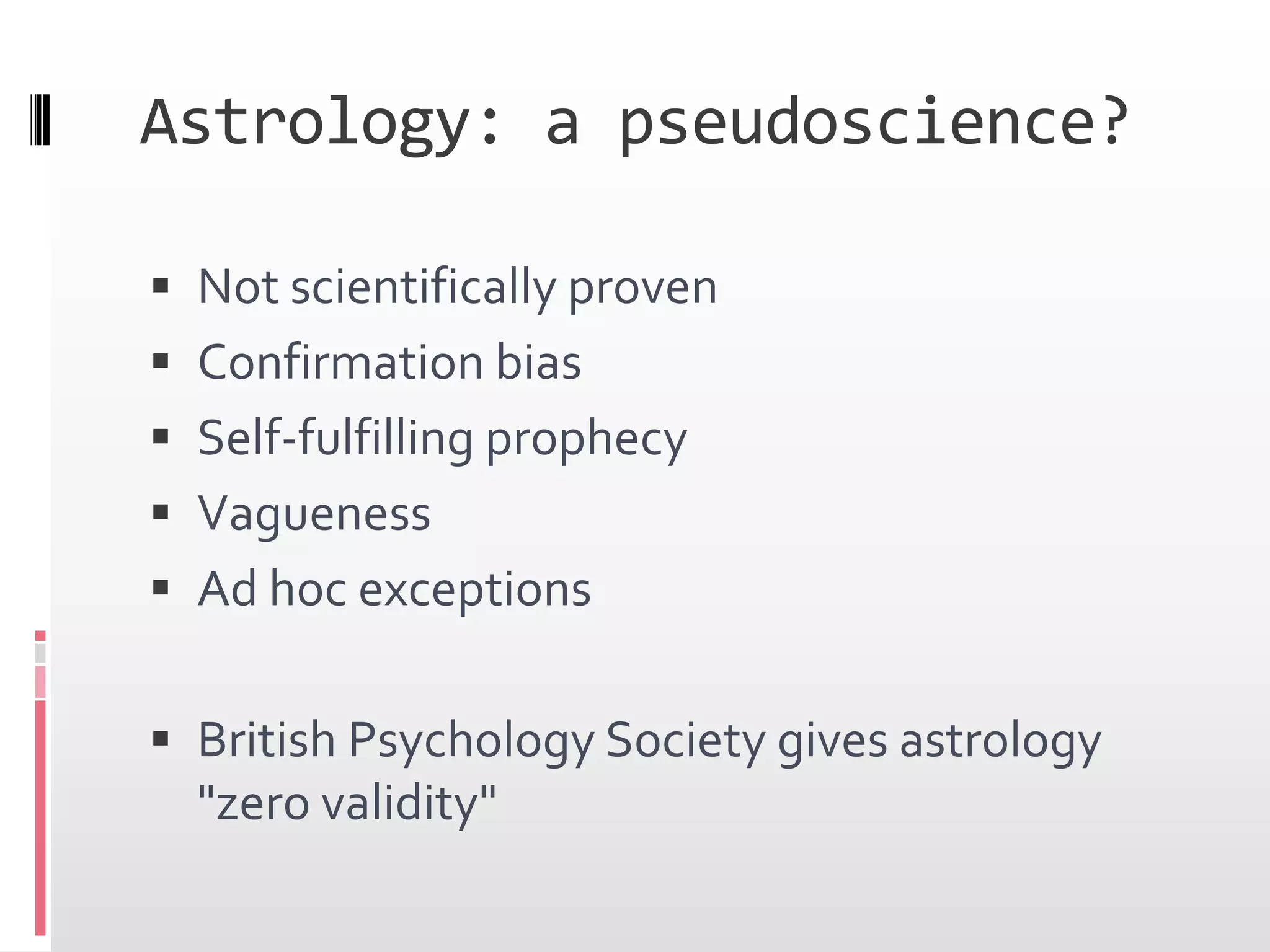
Astrology claims to predict future events and personality traits based on the positions of celestial bodies. However, there is no empirical evidence to support these claims. Astrology lacks testability and falsifiability, making it a classic example of pseudoscience.
Homeopathy:
Homeopathy is based on the idea that "like cures like" and involves using highly diluted substances to treat ailments. Despite its popularity, homeopathy lacks scientific evidence to support its efficacy. Clinical trials have consistently shown that homeopathic remedies are no more effective than placebos.
The Impact of Pseudoscience
Pseudoscience can have significant negative impacts on society. It can lead to misinformed decisions, wasted resources, and even harm to individuals. For example, the promotion of unproven medical treatments can delay or prevent people from seeking effective care, leading to serious health consequences.
Moreover, pseudoscience can erode public trust in science and scientific institutions. When pseudoscientific claims gain traction, they can create confusion and skepticism about genuine scientific findings, making it harder for society to address critical issues like climate change and public health.
Critical Thinking and Science Literacy
To navigate the complexities of Science Vs Pseudoscience, it is essential to develop critical thinking skills and science literacy. Critical thinking involves evaluating information objectively, questioning assumptions, and seeking evidence. Science literacy enables individuals to understand and apply scientific concepts to everyday life.
Here are some tips for promoting critical thinking and science literacy:
- Question Sources: Evaluate the credibility of information sources.
- Seek Evidence: Look for empirical evidence to support claims.
- Consider Alternatives: Explore different perspectives and explanations.
- Stay Informed: Keep up-to-date with the latest scientific research and developments.
- Engage in Dialogue: Discuss scientific topics with others to gain new insights.
By fostering a culture of critical thinking and science literacy, we can better distinguish between science and pseudoscience, making more informed decisions and contributing to a more knowledgeable society.
💡 Note: Critical thinking and science literacy are not just about understanding complex scientific concepts but also about applying logical reasoning to everyday situations.
The Role of Education
Education plays a crucial role in promoting science literacy and critical thinking. Schools and educational institutions should prioritize science education and teach students how to evaluate information critically. This includes:
- Science Curriculum: Incorporating a comprehensive science curriculum that covers various scientific disciplines.
- Critical Thinking Skills: Teaching students how to question assumptions, evaluate evidence, and think logically.
- Media Literacy: Helping students understand how to evaluate information from various media sources.
- Scientific Inquiry: Encouraging students to engage in scientific inquiry and conduct their own experiments.
By integrating these elements into the educational system, we can equip future generations with the tools they need to navigate the complexities of Science Vs Pseudoscience and make informed decisions.
📚 Note: Education is not just about acquiring knowledge but also about developing the skills to apply that knowledge effectively.
The Media's Role in Science Communication
The media plays a significant role in shaping public perception of science and pseudoscience. Responsible journalism involves accurately reporting scientific findings and providing context for complex issues. However, the media often faces challenges in balancing accuracy with sensationalism.
To improve science communication, the media should:
- Report Accurately: Ensure that scientific information is reported accurately and without bias.
- Provide Context: Offer context and background information to help readers understand complex issues.
- Consult Experts: Seek input from scientific experts to ensure the accuracy of reporting.
- Avoid Sensationalism: Focus on providing reliable information rather than sensational headlines.
By adhering to these principles, the media can help promote a more informed and scientifically literate public.
📰 Note: The media's role in science communication is crucial for bridging the gap between scientific research and public understanding.
Public Engagement and Science Outreach
Public engagement and science outreach initiatives are essential for fostering a scientifically literate society. These initiatives aim to make science accessible and engaging for the general public, encouraging curiosity and interest in scientific topics.
Effective science outreach involves:
- Interactive Exhibits: Creating interactive exhibits and demonstrations that make science fun and engaging.
- Public Lectures: Organizing lectures and talks by scientists to share their research and insights.
- Community Events: Hosting community events and workshops that bring science to local neighborhoods.
- Online Resources: Providing online resources and educational materials to reach a wider audience.
By engaging the public in science, we can foster a greater appreciation for scientific inquiry and a better understanding of the distinction between Science Vs Pseudoscience.
🌐 Note: Public engagement and science outreach are not just about educating the public but also about inspiring curiosity and a love for science.
The Future of Science and Pseudoscience
As society continues to evolve, the distinction between science and pseudoscience will remain a critical issue. The rise of digital media and social platforms has made it easier for pseudoscientific claims to spread rapidly, challenging our ability to discern fact from fiction.
To address this challenge, we must continue to promote science literacy, critical thinking, and responsible journalism. By fostering a culture of scientific inquiry and evidence-based decision-making, we can better navigate the complexities of Science Vs Pseudoscience and build a more informed and knowledgeable society.
In the future, advancements in technology and artificial intelligence may provide new tools for evaluating information and detecting pseudoscience. However, the ultimate responsibility lies with individuals to develop the skills and knowledge needed to make informed decisions.
By embracing science and rejecting pseudoscience, we can create a brighter future for ourselves and future generations.
In conclusion, the distinction between Science Vs Pseudoscience is fundamental to our understanding of the world and our ability to make informed decisions. By promoting science literacy, critical thinking, and responsible journalism, we can better navigate the complexities of modern information and build a more knowledgeable and scientifically literate society. Through education, public engagement, and media responsibility, we can foster a culture of scientific inquiry and evidence-based decision-making, ensuring a brighter future for all.
Related Terms:
- science vs pseudoscience worksheet
- characteristics of science vs pseudoscience
- identify science vs pseudoscience
- who coined the term pseudoscience
- science vs pseudoscience examples
- what distinguishes science from pseudoscience