
George Orwell's *Animal Farm* is a timeless allegorical novel that has captivated readers for decades with its profound exploration of political themes and societal structures. One of the most striking aspects of the novel is its portrayal of propaganda on Animal Farm, which serves as a powerful commentary on the manipulation of information and the abuse of power. Through the use of propaganda, Orwell illustrates how leaders can distort reality to maintain control and suppress dissent.
The Role of Propaganda in Animal Farm
Propaganda on Animal Farm is a central theme that permeates the narrative, highlighting the ways in which the pigs, particularly Napoleon and Squealer, use language and rhetoric to control the other animals. The pigs employ various propaganda techniques to justify their actions and maintain their dominance. These techniques include:
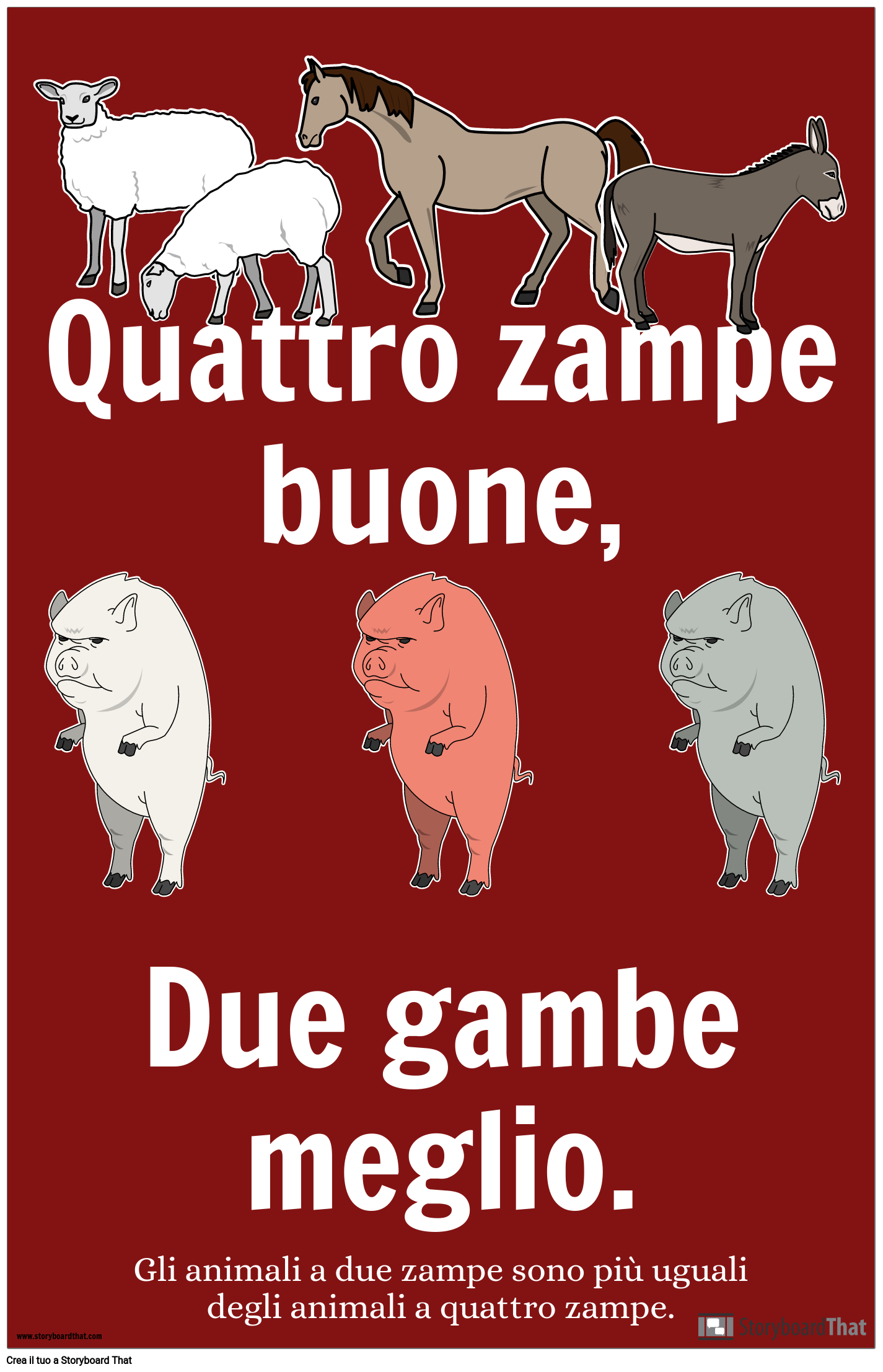
- Simplification: The pigs reduce complex issues to simple slogans, making it easier for the other animals to understand and accept their messages. For example, the Seven Commandments are simplified to "Four legs good, two legs bad," which initially unites the animals but later becomes a tool for manipulation.
- Repetition: The pigs repeatedly emphasize certain phrases and ideas to reinforce their messages. The constant repetition of slogans like "All animals are equal, but some animals are more equal than others" helps to normalize the pigs' privileged status.
- Emotional Appeal: The pigs appeal to the emotions of the other animals, using fear, guilt, and patriotism to control their behavior. For instance, they use the threat of Mr. Jones's return to justify their harsh measures and suppress any opposition.
- Scapegoating: The pigs blame external forces or internal dissenters for the problems on the farm. Snowball, for example, is scapegoated for the farm's failures, and his name becomes a symbol of all that is wrong, allowing Napoleon to consolidate his power.
Key Examples of Propaganda in Animal Farm
Throughout the novel, there are several key examples of propaganda on Animal Farm that illustrate the pigs' manipulation of information and control over the narrative. Some of the most notable instances include:
- The Seven Commandments: The original Seven Commandments are gradually altered to suit the pigs' needs. The commandment "No animal shall kill any other animal" is changed to "No animal shall kill any other animal without cause," allowing the pigs to justify their violent actions against dissenters.
- The Windmill: The construction of the windmill is a significant point of contention among the animals. The pigs use the windmill as a symbol of progress and unity, but when it is destroyed, they blame Snowball and use it as an excuse to tighten their control.
- The Battle of the Cowshed: The pigs glorify the Battle of the Cowshed as a heroic victory over the humans, using it to reinforce their leadership and justify their actions. However, the reality is much more complex, and the pigs' version of events is heavily distorted.
The Impact of Propaganda on the Animals
The use of propaganda on Animal Farm has a profound impact on the other animals, who are gradually stripped of their ability to think critically and question the pigs' authority. The animals become increasingly dependent on the pigs for information and guidance, making them vulnerable to manipulation. Some of the key impacts of propaganda on the animals include:
- Loss of Critical Thinking: The constant bombardment of propaganda messages erodes the animals' ability to think independently. They become reliant on the pigs' interpretations of events and are unable to form their own opinions.
- Fear and Intimidation: The pigs use propaganda to instill fear and intimidation in the other animals. The threat of Mr. Jones's return and the constant surveillance by the pigs' spies create an atmosphere of paranoia and mistrust.
- False Consensus: The pigs create the illusion of consensus by presenting their actions as the will of the majority. The animals are led to believe that everyone supports the pigs' decisions, even when this is not the case.
The Evolution of Propaganda Techniques
As the novel progresses, the pigs' propaganda techniques become more sophisticated and insidious. The evolution of these techniques reflects the increasing complexity of the pigs' manipulation and the deepening divide between the pigs and the other animals. Some of the key evolutions in propaganda techniques include:
- From Transparency to Opacity: Initially, the pigs' actions are relatively transparent, and the animals are able to see the changes being made to the farm. However, as the pigs consolidate their power, they become more secretive, and the animals are kept in the dark about important decisions.
- From Collective to Individual: The pigs' propaganda messages shift from collective to individual, focusing on the needs and desires of individual animals rather than the collective good. This shift helps to divide the animals and make them more susceptible to manipulation.
- From Rational to Emotional: The pigs' propaganda messages become more emotional, appealing to the animals' fears, hopes, and desires. This shift helps to bypass the animals' rational faculties and appeal directly to their emotions.
Propaganda and the Corruption of Power
Propaganda on Animal Farm is closely linked to the corruption of power, as the pigs use propaganda to justify their actions and maintain their dominance. The pigs' use of propaganda reflects their belief that power is an end in itself, and that any means necessary to achieve and maintain it are justified. Some of the key ways in which propaganda contributes to the corruption of power include:
- Justification of Actions: The pigs use propaganda to justify their actions, even when these actions are clearly self-serving and harmful to the other animals. For example, they justify the execution of dissenters as necessary for the good of the farm.
- Suppression of Dissent: The pigs use propaganda to suppress dissent and maintain their control. They portray dissenters as traitors and enemies of the farm, making it difficult for the other animals to question their authority.
- Manipulation of History: The pigs use propaganda to manipulate history, presenting their actions in a favorable light and distorting the truth. This manipulation of history helps to reinforce their legitimacy and justify their actions.
📝 Note: The pigs' use of propaganda in *Animal Farm* serves as a powerful reminder of the dangers of unchecked power and the importance of critical thinking and independent judgment.
The Legacy of Propaganda on Animal Farm
The legacy of propaganda on Animal Farm continues to resonate with readers today, as the novel's themes of manipulation, control, and the abuse of power remain relevant in contemporary society. The pigs' use of propaganda serves as a cautionary tale about the dangers of unchecked power and the importance of vigilance in the face of manipulation. Some of the key lessons that can be drawn from the novel's portrayal of propaganda include:
- The Importance of Critical Thinking: The novel emphasizes the importance of critical thinking and independent judgment in the face of propaganda. Readers are encouraged to question the information they receive and form their own opinions.
- The Dangers of Unchecked Power: The novel highlights the dangers of unchecked power and the importance of accountability and transparency in leadership. The pigs' use of propaganda to maintain their control serves as a warning about the potential for abuse of power.
- The Role of Language in Manipulation: The novel illustrates the role of language in manipulation and control. The pigs' use of propaganda to distort reality and justify their actions underscores the importance of clear and honest communication.
Propaganda on Animal Farm is a powerful and enduring theme that continues to captivate readers and provoke thought about the nature of power, manipulation, and control. Through its portrayal of the pigs' use of propaganda, the novel offers a stark warning about the dangers of unchecked power and the importance of critical thinking and independent judgment. The legacy of propaganda on Animal Farm serves as a reminder of the ongoing relevance of Orwell's themes and the enduring power of his storytelling.
In conclusion, Animal Farm stands as a timeless exploration of political themes and societal structures, with propaganda on Animal Farm serving as a central theme that underscores the novel’s warnings about the dangers of manipulation and the abuse of power. Through its portrayal of the pigs’ use of propaganda, the novel offers a powerful commentary on the nature of power and the importance of vigilance in the face of manipulation. The legacy of propaganda on Animal Farm continues to resonate with readers today, serving as a reminder of the ongoing relevance of Orwell’s themes and the enduring power of his storytelling.
Related Terms:
- animal farm quotes about propaganda
- animal farm propaganda essay help
- animal farm manipulation
- propaganda techniques in animal farm
- animal farm about communism
- propaganda in animal farming examples