
Understanding different types of data is fundamental in statistics and data analysis. One such type is ordinal data, which plays a crucial role in various fields, including social sciences, market research, and healthcare. Ordinal data examples are abundant in everyday life and research, making it essential to grasp their characteristics and applications.
What is Ordinal Data?
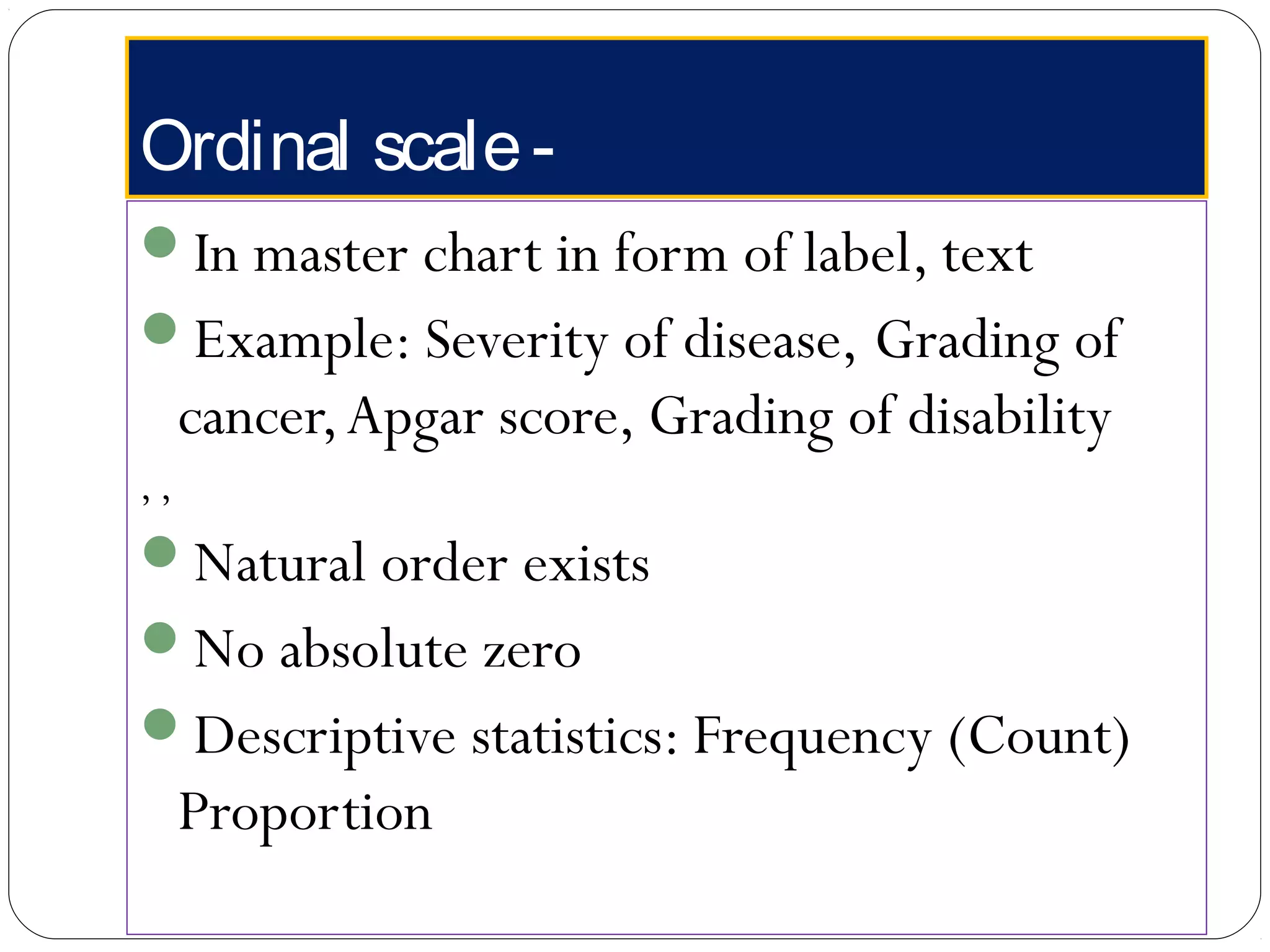
Ordinal data is a type of categorical data where the variables have a natural, ordered sequence. Unlike nominal data, which has no inherent order, ordinal data allows for ranking or ordering of the categories. For example, educational levels such as high school, bachelor's, master's, and Ph.D. can be ordered from lowest to highest. However, the intervals between these levels are not necessarily equal, which distinguishes ordinal data from interval or ratio data.
Characteristics of Ordinal Data
To better understand ordinal data, let's explore its key characteristics:
- Ordered Categories: The categories in ordinal data have a meaningful order. For instance, customer satisfaction ratings of "very dissatisfied," "dissatisfied," "neutral," "satisfied," and "very satisfied" can be ordered from least to most satisfied.
- Non-Numerical Intervals: The differences between the categories are not consistent or measurable. For example, the difference between "dissatisfied" and "neutral" may not be the same as the difference between "neutral" and "satisfied."
- No True Zero Point: Unlike ratio data, ordinal data does not have a true zero point. This means that a value of zero does not indicate the absence of the quantity being measured.
Ordinal Data Examples
Ordinal data examples are prevalent in various domains. Here are some common examples:
- Likert Scale: Often used in surveys to measure attitudes, opinions, and perceptions. Responses might include "strongly disagree," "disagree," "neutral," "agree," and "strongly agree."
- Educational Levels: As mentioned earlier, educational attainment can be ordered from lowest to highest, such as elementary school, high school, bachelor's degree, master's degree, and Ph.D.
- Customer Satisfaction Ratings: These ratings often use a scale from 1 to 5, where 1 might represent "very dissatisfied" and 5 represents "very satisfied."
- Military Ranks: Ranks such as private, corporal, sergeant, lieutenant, and general have a clear hierarchical order.
- Income Brackets: Income levels can be categorized into brackets like "less than $20,000," "$20,000-$40,000," "$40,000-$60,000," and "more than $60,000."
Analyzing Ordinal Data
Analyzing ordinal data requires specific statistical methods that respect the ordered nature of the data. Here are some common techniques:
- Median and Mode: Since ordinal data does not have a meaningful average, the median and mode are often used to summarize the data. The median is the middle value when the data is ordered, while the mode is the most frequently occurring value.
- Rank-Based Tests: Non-parametric tests such as the Mann-Whitney U test and the Kruskal-Wallis test are used to compare differences between groups. These tests do not assume a normal distribution and are suitable for ordinal data.
- Spearman's Rank Correlation: This statistical measure assesses the strength and direction of the relationship between two ordinal variables. It is based on the ranks of the data rather than the actual values.
Applications of Ordinal Data
Ordinal data has wide-ranging applications across various fields. Here are some notable examples:
- Market Research: Surveys often use ordinal data to gauge customer satisfaction, brand loyalty, and product preferences. This information helps businesses make informed decisions about marketing strategies and product development.
- Healthcare: Medical studies may use ordinal data to assess the severity of symptoms, patient outcomes, and treatment effectiveness. For example, pain levels can be rated on a scale from 1 to 10.
- Education: Educational research often involves ordinal data to evaluate student performance, learning outcomes, and educational attainment. This data can inform curriculum development and educational policies.
- Social Sciences: Sociological and psychological studies use ordinal data to measure attitudes, beliefs, and behaviors. This helps researchers understand social dynamics and human behavior.
Challenges with Ordinal Data
While ordinal data provides valuable insights, it also presents certain challenges:
- Limited Statistical Analysis: The ordered nature of ordinal data limits the types of statistical analyses that can be performed. Traditional methods like mean and standard deviation are not applicable.
- Interpretation of Results: Interpreting the results of ordinal data analysis can be complex. The lack of consistent intervals between categories makes it difficult to draw precise conclusions.
- Data Collection Issues: Ensuring that respondents understand and accurately report their ordinal responses can be challenging. Misinterpretation of categories can lead to biased or inaccurate data.
📝 Note: When collecting ordinal data, it is crucial to provide clear and unambiguous categories to minimize errors and ensure data quality.
Ordinal Data vs. Nominal Data
To further understand ordinal data, it is helpful to compare it with nominal data:
| Characteristic | Ordinal Data | Nominal Data |
|---|---|---|
| Order | Has a natural order | No inherent order |
| Examples | Educational levels, customer satisfaction ratings | Gender, blood types, marital status |
| Statistical Analysis | Median, mode, rank-based tests | Mode, frequency distributions |
While both types of data are categorical, the key difference lies in the presence of an ordered sequence in ordinal data.
Ordinal Data vs. Interval Data
Another important comparison is between ordinal and interval data:
| Characteristic | Ordinal Data | Interval Data |
|---|---|---|
| Intervals | Non-consistent intervals | Consistent intervals |
| Examples | Likert scale, educational levels | Temperature in Celsius, IQ scores |
| Statistical Analysis | Median, mode, rank-based tests | Mean, standard deviation, correlation |
Interval data allows for more precise statistical analysis due to the consistent intervals between values, whereas ordinal data is limited to rank-based methods.
Ordinal data is a vital component of data analysis, providing insights into ordered categories without the need for precise measurements. By understanding the characteristics, examples, and applications of ordinal data, researchers and analysts can effectively utilize this type of data to draw meaningful conclusions and make informed decisions.
In summary, ordinal data plays a crucial role in various fields by offering a structured way to analyze ordered categories. Its applications range from market research and healthcare to education and social sciences. While it presents challenges in statistical analysis, the use of appropriate methods can yield valuable insights. By recognizing the differences between ordinal data and other types of data, such as nominal and interval data, analysts can better understand and interpret their findings. This comprehensive understanding of ordinal data examples and their applications enhances the overall effectiveness of data-driven decision-making processes.
Related Terms:
- ordinal data examples in psychology
- ordinal scale examples
- ordinal data examples in survey
- nominal vs ordinal data examples
- ordinal categorical data examples
- ordinal data meaning