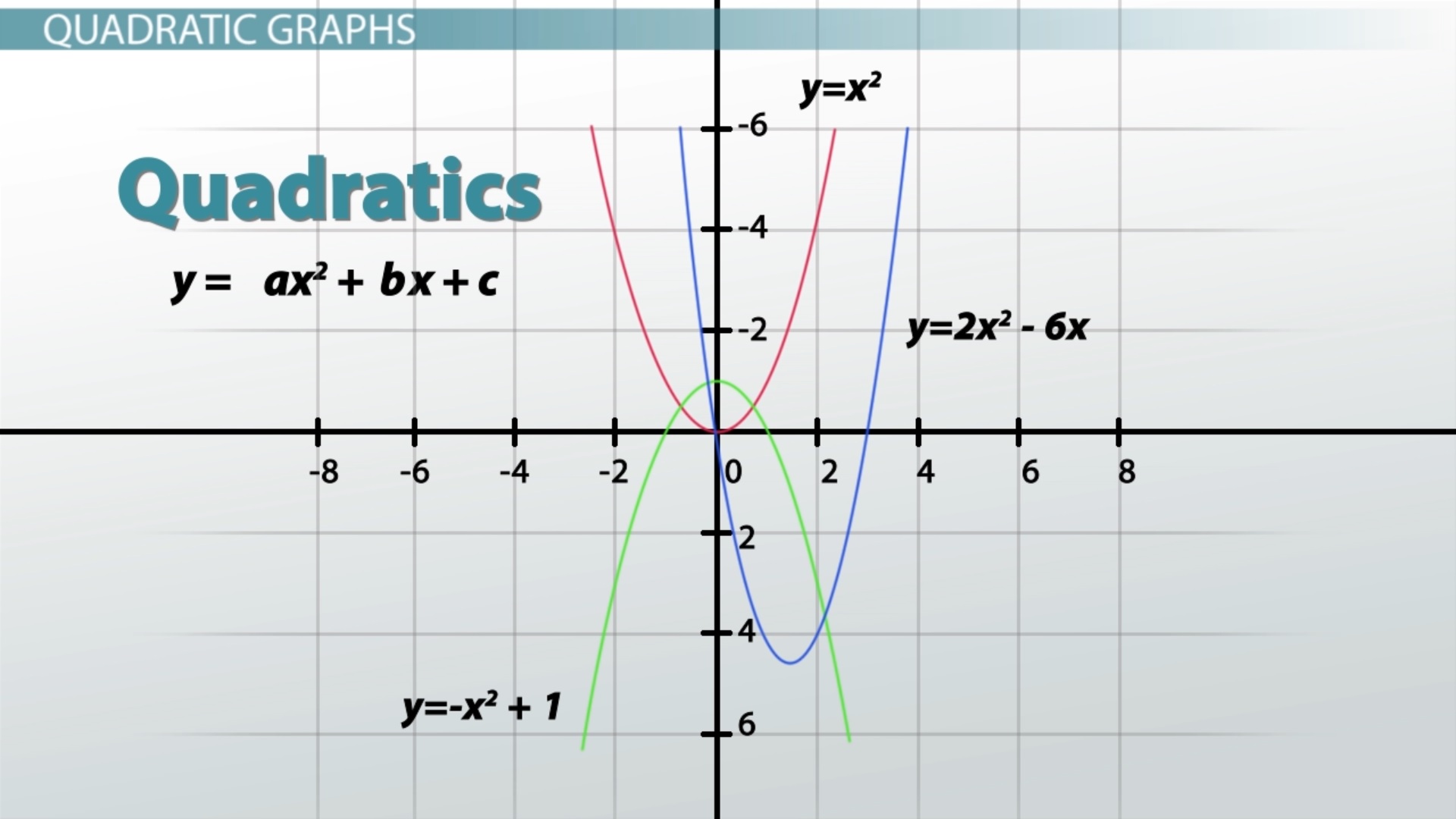

Graphs are fundamental structures in mathematics and computer science, used to model pairwise relations between objects. Understanding the math definition of graph is crucial for various applications, from social network analysis to routing algorithms. This post delves into the basics of graph theory, exploring its definitions, types, and applications.
Understanding the Math Definition of Graph
A graph in mathematics is a collection of vertices (or nodes) and edges (or links) that connect pairs of vertices. Formally, a graph G is defined as an ordered pair G = (V, E), where V is a set of vertices and E is a set of edges. Each edge is a 2-element subset of V.
Graphs can be classified into several types based on their properties:
- Undirected Graphs: Edges have no direction, meaning the connection between vertices is bidirectional.
- Directed Graphs (Digraphs): Edges have a direction, indicating a one-way connection from one vertex to another.
- Weighted Graphs: Edges have associated weights or costs, which can represent distances, capacities, or other quantitative values.
- Unweighted Graphs: Edges do not have associated weights.
- Cyclic Graphs: Contain at least one cycle, a path of edges and vertices wherein a vertex is reachable from itself.
- Acyclic Graphs: Do not contain any cycles.
Basic Terminology in Graph Theory
To fully grasp the math definition of graph, it's essential to understand some basic terminology:
- Vertex (Node): A fundamental unit of a graph, represented as a point.
- Edge (Link): A connection between two vertices.
- Degree of a Vertex: The number of edges connected to a vertex. In directed graphs, this is further divided into in-degree (incoming edges) and out-degree (outgoing edges).
- Path: A sequence of vertices where each adjacent pair is connected by an edge.
- Cycle: A path that starts and ends at the same vertex without repeating any other vertices or edges.
- Connected Graph: A graph where there is a path between any pair of vertices.
- Disconnected Graph: A graph where there exists at least one pair of vertices with no path between them.
Graph Representations
Graphs can be represented in various ways, each with its own advantages and use cases. The most common representations are:
- Adjacency Matrix: A 2D array where the element at the ith row and jth column indicates the presence (and possibly the weight) of an edge between vertex i and vertex j.
- Adjacency List: An array of lists, where each list at index i contains the neighbors of vertex i.
- Edge List: A list of edges, where each edge is represented as a pair of vertices.
Here is an example of an adjacency matrix for a simple undirected graph:
| 0 | 1 | 2 | 3 | |
|---|---|---|---|---|
| 0 | 0 | 1 | 0 | 1 |
| 1 | 1 | 0 | 1 | 0 |
| 2 | 0 | 1 | 0 | 1 |
| 3 | 1 | 0 | 1 | 0 |
💡 Note: The adjacency matrix for a directed graph would be similar, but the edges would only be represented in one direction.
Applications of Graphs
The math definition of graph finds applications in numerous fields, including computer science, social sciences, and engineering. Some notable applications are:
- Network Routing: Graphs are used to model networks and find optimal paths for data transmission.
- Social Network Analysis: Graphs represent social connections and help analyze the spread of information or influence.
- Recommendation Systems: Graphs model user-item interactions to provide personalized recommendations.
- Bioinformatics: Graphs represent biological networks, such as protein-protein interactions or genetic regulatory networks.
- Computer Vision: Graphs model the relationships between pixels or objects in images for tasks like image segmentation or object recognition.
Graph Algorithms
Several algorithms are used to analyze and manipulate graphs. Some of the most important ones include:
- Depth-First Search (DFS): A traversal algorithm that explores as far as possible along each branch before backtracking.
- Breadth-First Search (BFS): A traversal algorithm that explores all neighbors at the present depth prior to moving on to vertices at the next depth level.
- Dijkstra's Algorithm: An algorithm for finding the shortest paths between nodes in a graph, which may represent, for example, road networks.
- Kruskal's Algorithm: An algorithm used to find the minimum spanning tree of a connected weighted graph.
- Prim's Algorithm: Another algorithm used to find the minimum spanning tree of a connected weighted graph.
These algorithms are fundamental in solving various problems related to graphs, from finding shortest paths to detecting cycles.
Graphs are versatile structures that can model a wide range of relationships and interactions. Understanding the math definition of graph and its various representations and algorithms is essential for anyone working in fields that involve complex systems and networks. Whether you're analyzing social networks, optimizing routing algorithms, or studying biological systems, graph theory provides the tools and concepts needed to tackle these challenges effectively.
By mastering the basics of graph theory, you can unlock a powerful set of techniques for modeling and analyzing complex systems. From simple traversal algorithms to advanced network analysis, the principles of graph theory are applicable across a wide range of disciplines. As you delve deeper into the world of graphs, you’ll discover their incredible versatility and the profound insights they can provide into the structure and behavior of complex systems.
Related Terms:
- graphing meaning in math
- what is graphing in math
- what is graph in mathematics
- simple definition of graph
- meaning of graph in math
- graph simple definition math