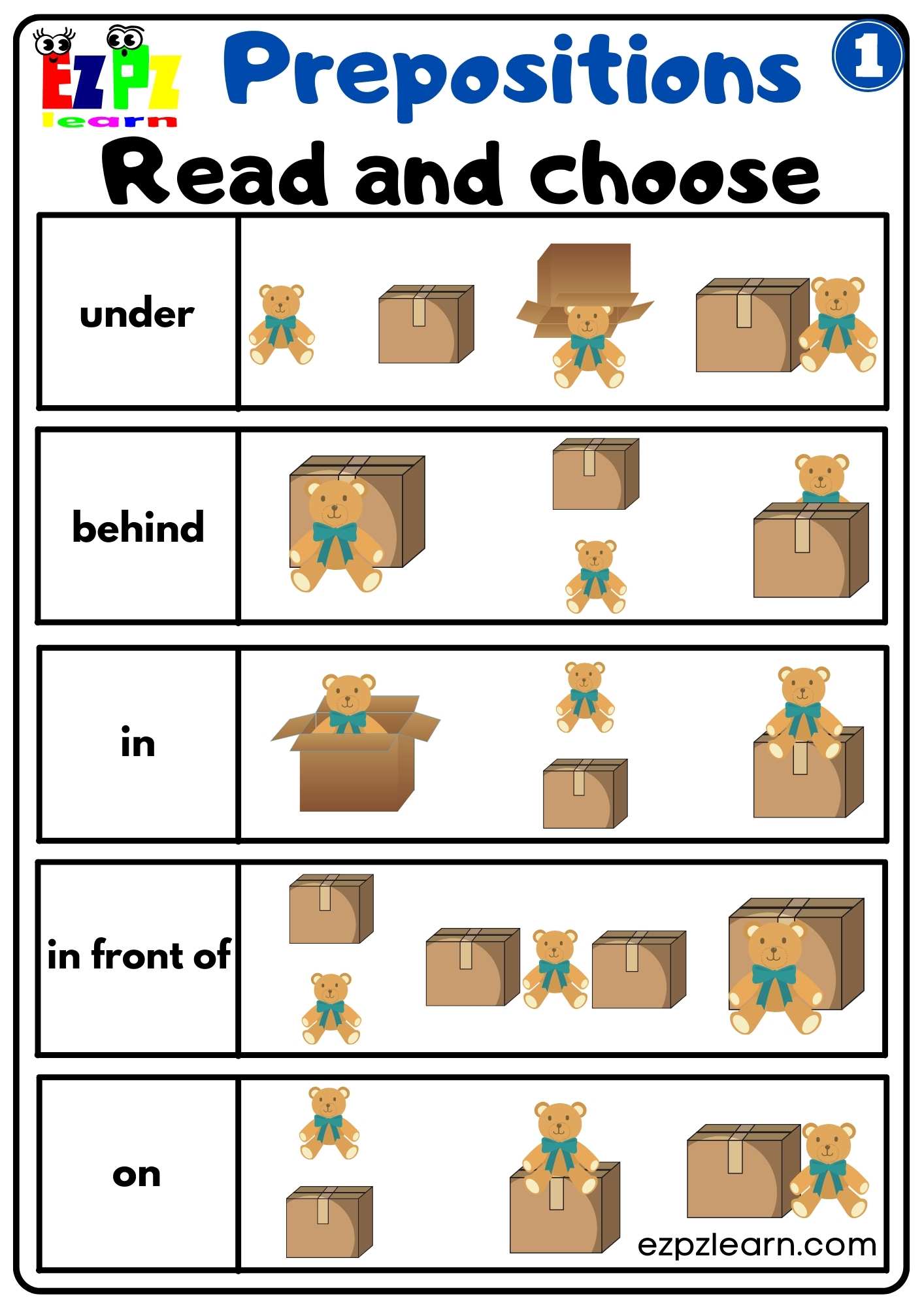

Understanding the intricacies of grammar can often be a challenging task, especially when it comes to prepositions. One of the most common questions that arise is whether a specific word is a preposition. This question is crucial for both native speakers and language learners alike, as prepositions play a vital role in constructing meaningful sentences. In this post, we will delve into the concept of prepositions, explore examples, and clarify whether certain words, such as "is" and "was," can be considered prepositions.
What is a Preposition?
A preposition is a word that shows relationships between a noun or pronoun and other words in a sentence. These relationships can be spatial, temporal, or logical. Prepositions help to answer questions such as where, when, how, and why. Common prepositions include words like in, on, at, by, for, with, and under.
Common Prepositions and Their Uses
Prepositions are essential for conveying precise meanings in sentences. Here are some examples of common prepositions and their uses:
- In: Used to indicate location, time, or inclusion. Example: “The book is in the library.”
- On: Used to indicate position, time, or support. Example: “The cat is on the table.”
- At: Used to indicate a specific point in time or location. Example: “I will meet you at the park.”
- By: Used to indicate the means, agent, or time. Example: “The letter was written by John.”
- For: Used to indicate purpose, duration, or recipient. Example: “This gift is for you.”
- With: Used to indicate accompaniment or means. Example: “She went to the store with her friend.”
- Under: Used to indicate position or condition. Example: “The dog is under the bed.”
Is “Is” a Preposition?
The word “is” is a form of the verb “to be” and is used to indicate a state of being or existence. It is not a preposition. Prepositions are words that show relationships between nouns or pronouns and other words in a sentence, while “is” functions as a linking verb. For example, in the sentence “She is happy,” “is” links the subject “she” to the subject complement “happy.”
Is “Was” a Preposition?
Similarly, the word “was” is also a form of the verb “to be” and is used to indicate a past state of being or existence. Like “is,” “was” is not a preposition. It functions as a linking verb in sentences. For example, in the sentence “He was tired,” “was” links the subject “he” to the subject complement “tired.”
Examples of Prepositions in Sentences
To further illustrate the use of prepositions, let’s look at some examples:
- She put the book on the shelf.
- They arrived at the station early.
- The cat is hiding under the bed.
- He gave the gift to his mother.
- We will meet in the park at noon.
Prepositions of Time
Prepositions of time indicate when an action occurs. Some common prepositions of time include:
- At: Used for specific times. Example: “The meeting is at 3 PM.”
- On: Used for specific days. Example: “We will celebrate on Saturday.”
- In: Used for months, years, and longer periods. Example: “She will graduate in June.”
- During: Used for periods of time. Example: “It rained during the night.”
- Before and After: Used to indicate sequence. Example: “We will leave before noon.”
Prepositions of Place
Prepositions of place indicate where an action occurs. Some common prepositions of place include:
- In: Used for enclosed spaces. Example: “The keys are in the drawer.”
- On: Used for surfaces. Example: “The book is on the table.”
- At: Used for specific locations. Example: “We will meet at the café.”
- Under: Used for positions below something. Example: “The cat is under the table.”
- Between: Used for positions in the middle of two things. Example: “The house is between the park and the school.”
Prepositions of Direction
Prepositions of direction indicate the path or movement from one place to another. Some common prepositions of direction include:
- To: Used for movement towards a place. Example: “She went to the store.”
- From: Used for movement away from a place. Example: “He came from the office.”
- Through: Used for movement within an enclosed space. Example: “We walked through the forest.”
- Across: Used for movement from one side to the other. Example: “They swam across the river.”
- Over: Used for movement above something. Example: “The bird flew over the tree.”
Prepositions of Cause and Purpose
Prepositions of cause and purpose indicate the reason or goal behind an action. Some common prepositions of cause and purpose include:
- For: Used to indicate purpose or recipient. Example: “This gift is for you.”
- Because of: Used to indicate cause. Example: “We canceled the trip because of the rain.”
- Due to: Used to indicate cause. Example: “The delay was due to heavy traffic.”
- In order to: Used to indicate purpose. Example: “She studied hard in order to pass the exam.”
- So that: Used to indicate purpose. Example: “He saved money so that he could buy a car.”
Prepositions of Manner
Prepositions of manner indicate how an action is performed. Some common prepositions of manner include:
- With: Used to indicate the means or instrument. Example: “She cut the cake with a knife.”
- By: Used to indicate the means or agent. Example: “The letter was written by John.”
- In: Used to indicate the manner or style. Example: “She spoke in a soft voice.”
- On: Used to indicate the manner or style. Example: “He walked on tiptoes.”
- Without: Used to indicate the absence of something. Example: “She left without saying goodbye.”
Prepositions of Accompaniment
Prepositions of accompaniment indicate who or what is with someone or something. Some common prepositions of accompaniment include:
- With: Used to indicate who or what is accompanying. Example: “She went to the store with her friend.”
- By: Used to indicate who or what is accompanying. Example: “The book was written by John.”
- Along with: Used to indicate who or what is accompanying. Example: “He traveled along with his family.”
- Together with: Used to indicate who or what is accompanying. Example: “They worked together with their colleagues.”
- Accompanied by: Used to indicate who or what is accompanying. Example: “The performance was accompanied by live music.”
Prepositions of Possession
Prepositions of possession indicate ownership or relationship. Some common prepositions of possession include:
- Of: Used to indicate possession or relationship. Example: “The book of stories.”
- For: Used to indicate possession or relationship. Example: “A gift for her.”
- With: Used to indicate possession or relationship. Example: “A man with a hat.”
- By: Used to indicate possession or relationship. Example: “A painting by Picasso.”
- To: Used to indicate possession or relationship. Example: “A letter to her.”
📝 Note: Prepositions can sometimes be tricky to master, but with practice and attention to context, they can be used effectively to convey precise meanings in sentences.
Prepositions are a fundamental part of English grammar, and understanding their uses is essential for clear and effective communication. Whether you are a native speaker or a language learner, mastering prepositions will enhance your ability to express ideas accurately and confidently.
By exploring the various types of prepositions and their functions, we can gain a deeper understanding of how language works and how to use it effectively. Whether you are writing a formal report, composing a poem, or engaging in everyday conversation, prepositions play a crucial role in conveying your message clearly and precisely.
In summary, prepositions are essential for indicating relationships between nouns or pronouns and other words in a sentence. While words like “is” and “was” are not prepositions, they serve important functions as linking verbs. Understanding the different types of prepositions and their uses can greatly enhance your language skills and communication abilities.
Related Terms:
- is were a preposition
- is there a preposition
- is until a preposition
- is during a preposition
- is so a preposition
- is never a preposition