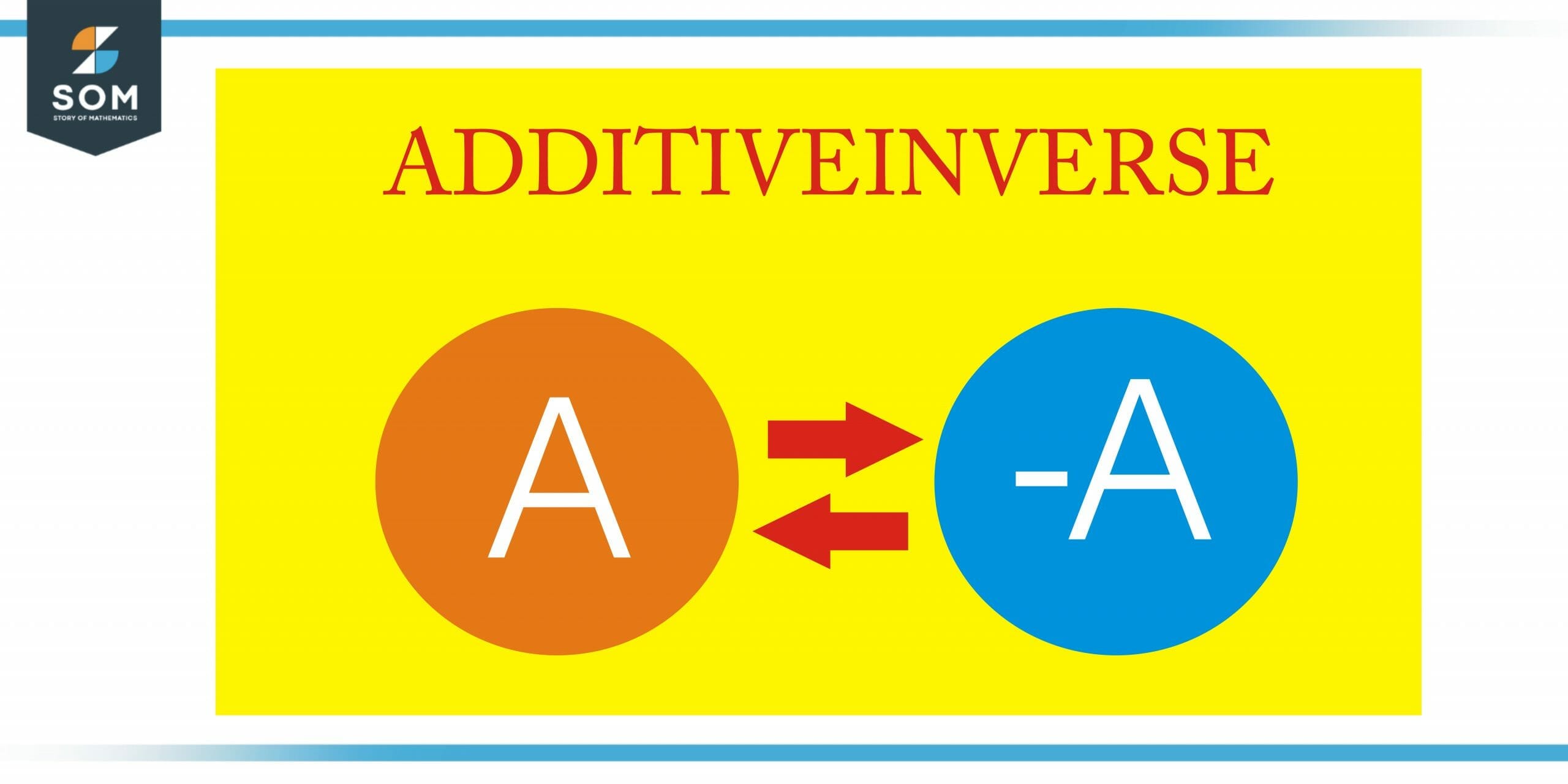

In the realm of mathematics, particularly in the field of algebra, the concept of Inverse Property Addition is fundamental. It serves as a cornerstone for understanding more complex mathematical operations and solving equations. This property states that for any real number *a*, there exists a number *-a* such that their sum is zero. In other words, *a + (-a) = 0*. This simple yet powerful principle has wide-ranging applications and implications in various areas of mathematics and beyond.
Understanding the Inverse Property Addition
The Inverse Property Addition is one of the basic properties of addition in mathematics. It is closely related to the concept of additive inverses. An additive inverse of a number is a number that, when added to the original number, results in zero. For example, the additive inverse of 5 is -5, because 5 + (-5) = 0.
This property is crucial for several reasons:
- It helps in simplifying algebraic expressions.
- It is essential for solving linear equations.
- It forms the basis for understanding more advanced mathematical concepts.
Applications of Inverse Property Addition
The Inverse Property Addition has numerous applications in mathematics and other fields. Here are some key areas where this property is applied:
Solving Linear Equations
One of the most common applications of the Inverse Property Addition is in solving linear equations. When solving an equation like *x + 3 = 7*, we use the inverse property to isolate the variable *x*. By adding the additive inverse of 3, which is -3, to both sides of the equation, we get:
*x + 3 + (-3) = 7 + (-3)*
This simplifies to:
*x = 4*
Simplifying Algebraic Expressions
The Inverse Property Addition is also used to simplify algebraic expressions. For example, consider the expression *a + b + (-a)*. By applying the inverse property, we can simplify this expression to *b*. This is because *a + (-a) = 0*, so the expression reduces to *0 + b*, which is simply *b*.
Balancing Chemical Equations
In chemistry, the Inverse Property Addition is used to balance chemical equations. When balancing an equation, we ensure that the number of atoms of each element is the same on both sides of the equation. This often involves adding coefficients to the reactants and products, which is akin to adding and subtracting terms in an algebraic expression.
Financial Calculations
In finance, the Inverse Property Addition is used in various calculations, such as determining net income or loss. For example, if a company has revenues of $100,000 and expenses of $80,000, the net income can be calculated as $100,000 + (-$80,000) = $20,000. Here, the expenses are treated as negative values, and the inverse property is used to find the net income.
Examples of Inverse Property Addition
To further illustrate the Inverse Property Addition, let's consider a few examples:
Example 1: Simple Addition
Consider the numbers 7 and -7. According to the inverse property, their sum should be zero:
*7 + (-7) = 0*
This example demonstrates the basic application of the inverse property.
Example 2: Algebraic Expression
Consider the algebraic expression *3x + 5 - 3x*. We can simplify this expression using the inverse property:
*3x + 5 + (-3x) = 5*
Here, *3x* and *-3x* are additive inverses, so their sum is zero, leaving us with the simplified expression *5*.
Example 3: Solving an Equation
Consider the equation *x - 4 = 9*. To solve for *x*, we add the additive inverse of -4, which is 4, to both sides of the equation:
*x - 4 + 4 = 9 + 4*
This simplifies to:
*x = 13*
Inverse Property Addition in Advanced Mathematics
The Inverse Property Addition is not limited to basic arithmetic and algebra. It also plays a crucial role in more advanced areas of mathematics, such as linear algebra and calculus.
Linear Algebra
In linear algebra, the inverse property is used in the context of vectors and matrices. For example, the additive inverse of a vector *v* is *-v*, and their sum is the zero vector. Similarly, the additive inverse of a matrix *A* is *-A*, and their sum is the zero matrix.
Calculus
In calculus, the inverse property is used in the context of limits and derivatives. For example, when finding the limit of a function as it approaches a certain value, we often use the inverse property to simplify the expression. Similarly, when finding the derivative of a function, we use the inverse property to simplify the expression and find the rate of change.
Common Misconceptions
Despite its simplicity, the Inverse Property Addition is often misunderstood. Here are some common misconceptions:
- Misconception 1: The additive inverse is always negative. This is not true. The additive inverse of a positive number is negative, but the additive inverse of a negative number is positive. For example, the additive inverse of -3 is 3.
- Misconception 2: The inverse property only applies to real numbers. While the inverse property is most commonly applied to real numbers, it can also be applied to other number systems, such as complex numbers and rational numbers.
- Misconception 3: The inverse property is only used in algebra. As discussed earlier, the inverse property has applications in various fields, including chemistry, finance, and advanced mathematics.
💡 Note: Understanding these misconceptions can help clarify the true nature of the inverse property and its applications.
Practical Exercises
To reinforce your understanding of the Inverse Property Addition, try the following exercises:
Exercise 1: Simple Addition
Find the additive inverse of the following numbers and verify that their sum is zero:
- 5
- -8
- 0
- 12.5
Exercise 2: Algebraic Expressions
Simplify the following algebraic expressions using the inverse property:
- *3x + 7 - 3x*
- *a + b + (-a)*
- *5y - 2y + 3y - 5y*
Exercise 3: Solving Equations
Solve the following equations using the inverse property:
- *x + 6 = 10*
- *y - 4 = -2*
- *3z + 5 = 14*
Inverse Property Addition in Real-World Scenarios
The Inverse Property Addition is not just a theoretical concept; it has practical applications in real-world scenarios. Here are a few examples:
Budgeting
When creating a budget, the inverse property is used to balance income and expenses. For example, if your income is $3,000 and your expenses are $2,500, your savings can be calculated as $3,000 + (-$2,500) = $500. Here, the expenses are treated as negative values, and the inverse property is used to find the savings.
Physics
In physics, the inverse property is used to calculate net forces and velocities. For example, if a force of 10 N is applied in one direction and a force of 5 N is applied in the opposite direction, the net force can be calculated as 10 N + (-5 N) = 5 N. Here, the forces are treated as vectors, and the inverse property is used to find the net force.
Engineering
In engineering, the inverse property is used in various calculations, such as determining the net torque or the net displacement. For example, if a torque of 20 Nm is applied in one direction and a torque of 15 Nm is applied in the opposite direction, the net torque can be calculated as 20 Nm + (-15 Nm) = 5 Nm. Here, the torques are treated as vectors, and the inverse property is used to find the net torque.
Inverse Property Addition in Different Number Systems
The Inverse Property Addition is not limited to real numbers. It can also be applied to other number systems, such as complex numbers and rational numbers.
Complex Numbers
In the system of complex numbers, the inverse property is used to simplify expressions involving complex numbers. For example, consider the complex number *a + bi*, where *a* and *b* are real numbers, and *i* is the imaginary unit. The additive inverse of *a + bi* is *-a - bi*, and their sum is zero:
*a + bi + (-a - bi) = 0*
Rational Numbers
In the system of rational numbers, the inverse property is used to simplify expressions involving fractions. For example, consider the fraction *a/b*, where *a* and *b* are integers and *b* is not zero. The additive inverse of *a/b* is *-a/b*, and their sum is zero:
*a/b + (-a/b) = 0*
Inverse Property Addition in Programming
The Inverse Property Addition is also relevant in programming, particularly in languages that support arithmetic operations. Here are a few examples:
Python
In Python, the inverse property can be demonstrated using simple arithmetic operations. For example:
a = 5
b = -5
print(a + b)  # Output: 0
JavaScript
In JavaScript, the inverse property can be used to simplify expressions. For example:
let x = 10;
let y = -10;
console.log(x + y);  // Output: 0
C++
In C++, the inverse property can be applied to variables and constants. For example:
#include
using namespace std;

int main() {
    int a = 7;
    int b = -7;
    cout << a + b << endl;  // Output: 0
    return 0;
}
These examples demonstrate how the inverse property can be applied in different programming languages to perform arithmetic operations and simplify expressions.
💡 Note: Understanding how to apply the inverse property in programming can help in writing more efficient and accurate code.
Inverse Property Addition in Data Analysis
The Inverse Property Addition is also used in data analysis to balance datasets and perform calculations. Here are a few examples:
Balancing Datasets
When analyzing data, it is often necessary to balance the dataset to ensure accurate results. For example, if a dataset contains positive and negative values, the inverse property can be used to balance the dataset. This involves adding the additive inverse of each negative value to the dataset, resulting in a balanced dataset.
Calculating Net Values
In data analysis, the inverse property is used to calculate net values, such as net income or net loss. For example, if a dataset contains revenues and expenses, the net income can be calculated by adding the additive inverse of each expense to the corresponding revenue. This results in a net value that represents the overall financial performance.
Performing Statistical Analysis
In statistical analysis, the inverse property is used to perform calculations involving means and medians. For example, when calculating the mean of a dataset, the inverse property can be used to simplify the expression and find the average value. Similarly, when calculating the median, the inverse property can be used to balance the dataset and find the middle value.
Inverse Property Addition in Machine Learning
The Inverse Property Addition plays a crucial role in machine learning, particularly in the context of optimization algorithms. Here are a few examples:
Gradient Descent
In gradient descent, the inverse property is used to update the weights of a model. For example, when performing gradient descent, the weights are updated by subtracting the product of the learning rate and the gradient of the loss function. This involves adding the additive inverse of the gradient to the current weights, resulting in an updated set of weights that minimize the loss function.
Regularization
In regularization, the inverse property is used to add a penalty term to the loss function. For example, when performing L2 regularization, a penalty term is added to the loss function to prevent overfitting. This penalty term is the sum of the squares of the weights, and the inverse property is used to simplify the expression and find the optimal set of weights.
Optimization Algorithms
In optimization algorithms, the inverse property is used to find the minimum or maximum value of a function. For example, when performing optimization, the inverse property can be used to simplify the expression and find the optimal value. This involves adding the additive inverse of the gradient to the current value, resulting in an updated value that minimizes or maximizes the function.
These examples demonstrate how the inverse property can be applied in machine learning to perform optimization and regularization, resulting in more accurate and efficient models.
💡 Note: Understanding how to apply the inverse property in machine learning can help in developing more accurate and efficient models.
Inverse Property Addition in Game Development
The Inverse Property Addition is also relevant in game development, particularly in the context of physics engines and collision detection. Here are a few examples:
Physics Engines
In physics engines, the inverse property is used to calculate net forces and velocities. For example, when simulating a collision between two objects, the net force can be calculated by adding the additive inverse of the force exerted by one object to the force exerted by the other object. This results in a net force that determines the motion of the objects.
Collision Detection
In collision detection, the inverse property is used to calculate the net displacement of objects. For example, when detecting a collision between two objects, the net displacement can be calculated by adding the additive inverse of the displacement of one object to the displacement of the other object. This results in a net displacement that determines the position of the objects after the collision.
Game Mechanics
In game mechanics, the inverse property is used to balance game elements, such as health points and mana points. For example, when a player takes damage, the health points can be updated by subtracting the damage value. This involves adding the additive inverse of the damage value to the current health points, resulting in an updated health value that reflects the damage taken.
These examples demonstrate how the inverse property can be applied in game development to perform physics simulations, collision detection, and game mechanics, resulting in more realistic and engaging games.
💡 Note: Understanding how to apply the inverse property in game development can help in creating more realistic and engaging games.
In conclusion, the Inverse Property Addition is a fundamental concept in mathematics with wide-ranging applications. From solving linear equations to balancing chemical equations, from budgeting to machine learning, this property plays a crucial role in various fields. Understanding and applying the inverse property can help in simplifying expressions, solving problems, and developing more accurate and efficient models. Whether you are a student, a professional, or a hobbyist, mastering the inverse property can enhance your problem-solving skills and broaden your understanding of mathematics and its applications.
Related Terms:
- additive inverse property meaning
- inverse property of addition definition
- additive inverse of 2 7
- examples of inverse property addition
- additive inverse of 3 4
- two examples of inverse property