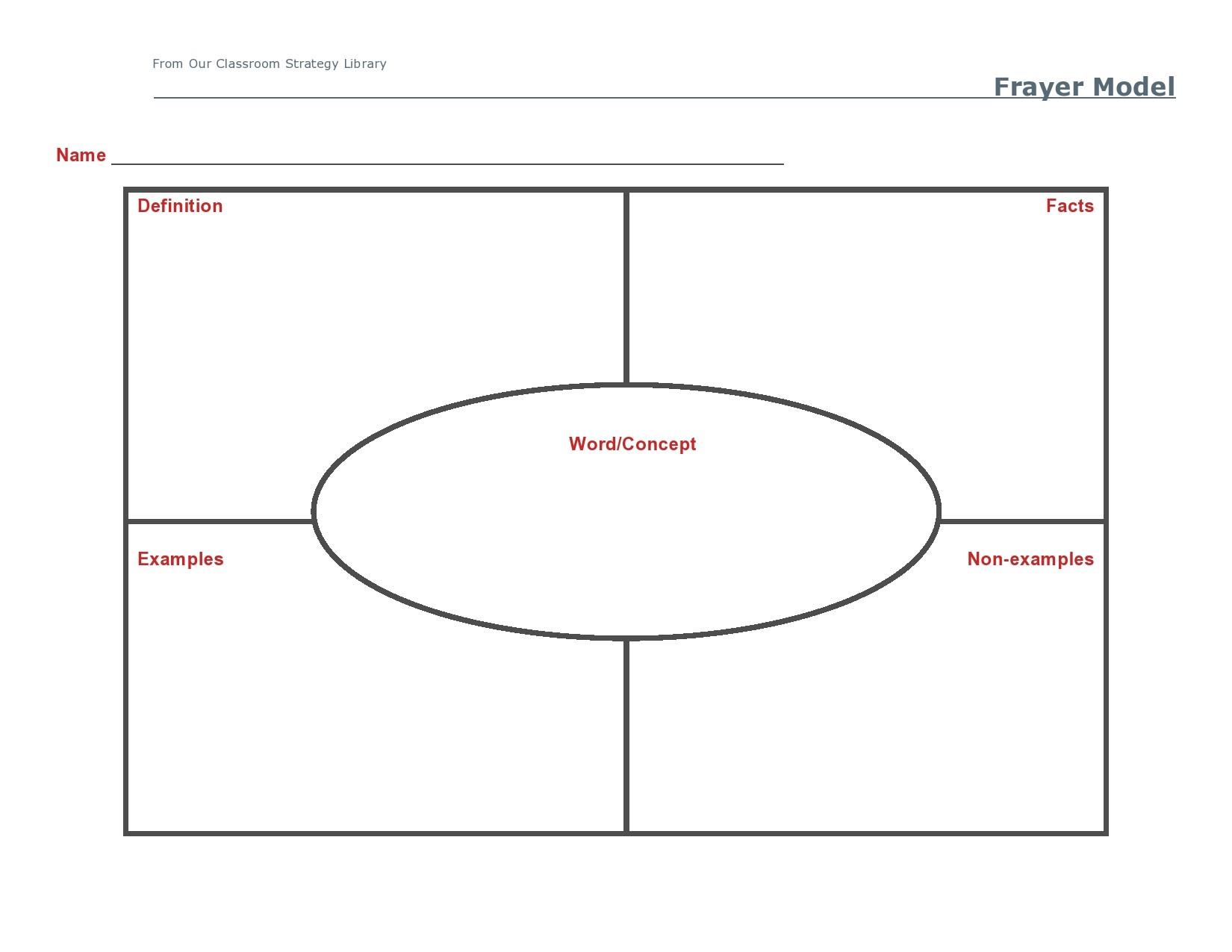

In the realm of education, effective teaching strategies are crucial for enhancing student understanding and retention. One such strategy that has gained significant traction is the Frayer Model Worksheet Activity. This activity is designed to help students deepen their comprehension of new vocabulary words by breaking down the meaning into four key components: definition, characteristics, examples, and non-examples. By engaging in this structured approach, students can gain a more comprehensive understanding of complex terms, making it an invaluable tool for educators across various subjects.
Understanding the Frayer Model
The Frayer Model is a graphic organizer that helps students analyze and understand new vocabulary words. Developed by Dorothy Frayer and her colleagues, this model provides a framework for students to explore the nuances of a word by examining its definition, essential characteristics, examples, and non-examples. This multi-faceted approach ensures that students not only memorize the definition but also grasp the context and usage of the word.
Components of the Frayer Model Worksheet Activity
The Frayer Model Worksheet Activity consists of four main components:
- Definition: A clear and concise explanation of what the word means.
- Characteristics: Key features or attributes that describe the word.
- Examples: Specific instances that illustrate the word's meaning.
- Non-Examples: Instances that do not fit the word's definition, helping to clarify its boundaries.
By filling out these components, students can develop a well-rounded understanding of the word, making it easier to apply in various contexts.
Steps to Implement the Frayer Model Worksheet Activity
Implementing the Frayer Model Worksheet Activity in the classroom is straightforward. Here are the steps to follow:
- Select a Word: Choose a vocabulary word that is relevant to the current lesson or unit. Ensure it is a word that students may find challenging or unfamiliar.
- Distribute the Worksheet: Provide each student with a Frayer Model Worksheet. This worksheet should have sections for the definition, characteristics, examples, and non-examples.
- Define the Word: Ask students to write a clear and concise definition of the word in their own words. Encourage them to use resources like dictionaries or textbooks if needed.
- Identify Characteristics: Have students list the key features or attributes that describe the word. This step helps them understand the word's essence and how it is used.
- Provide Examples: Students should provide specific instances that illustrate the word's meaning. These examples can be drawn from real-life experiences, literature, or other sources.
- List Non-Examples: Finally, students should list instances that do not fit the word's definition. This step is crucial as it helps clarify the word's boundaries and prevents misconceptions.
- Review and Discuss: After completing the worksheet, review the answers as a class. Discuss the definitions, characteristics, examples, and non-examples to ensure a shared understanding.
📝 Note: Encourage students to be creative and think critically when identifying characteristics, examples, and non-examples. This will enhance their analytical skills and deepen their understanding of the word.
Benefits of the Frayer Model Worksheet Activity
The Frayer Model Worksheet Activity offers numerous benefits for both students and educators:
- Enhanced Vocabulary Development: By breaking down words into their components, students can build a stronger vocabulary and improve their language skills.
- Critical Thinking: The activity encourages students to think critically about the meaning of words, helping them develop analytical skills.
- Contextual Understanding: By providing examples and non-examples, students gain a contextual understanding of the word, making it easier to apply in various situations.
- Engaging and Interactive: The structured format of the worksheet makes the activity engaging and interactive, keeping students motivated and focused.
- Versatile Application: The Frayer Model can be used across various subjects, from science and mathematics to literature and social studies, making it a versatile tool for educators.
Examples of Frayer Model Worksheet Activity
To illustrate how the Frayer Model Worksheet Activity can be applied, let's consider an example from a science class. Suppose the word to be studied is "photosynthesis." Here’s how the worksheet might be filled out:
| Component | Description |
|---|---|
| Definition | The process by which green plants and some other organisms use sunlight to synthesize nutrients from carbon dioxide and water. |
| Characteristics |
|
| Examples |
|
| Non-Examples |
|
This example demonstrates how the Frayer Model can be used to deepen students' understanding of scientific concepts by breaking down complex terms into manageable components.
Adapting the Frayer Model for Different Subjects
The versatility of the Frayer Model Worksheet Activity makes it suitable for various subjects. Here are some adaptations for different disciplines:
- Mathematics: Use the Frayer Model to define mathematical terms like "fraction," "algorithm," or "hypotenuse." Students can list characteristics such as the components of a fraction or the steps in an algorithm.
- Literature: Apply the model to literary terms like "metaphor," "theme," or "protagonist." Students can provide examples from texts they have read and non-examples to clarify the term's boundaries.
- Social Studies: Define historical or political terms like "democracy," "revolution," or "culture." Students can list characteristics of these terms and provide real-world examples and non-examples.
- Science: Use the model for scientific terms like "ecosystem," "energy," or "cell." Students can explore the characteristics, examples, and non-examples of these terms to deepen their understanding.
By adapting the Frayer Model to different subjects, educators can ensure that students gain a comprehensive understanding of key terms, regardless of the discipline.
Tips for Effective Implementation
To maximize the effectiveness of the Frayer Model Worksheet Activity, consider the following tips:
- Choose Relevant Words: Select vocabulary words that are relevant to the current lesson or unit. This ensures that the activity is meaningful and engaging for students.
- Encourage Creativity: Allow students to be creative in identifying characteristics, examples, and non-examples. This fosters critical thinking and enhances their understanding of the word.
- Provide Examples: Offer examples of completed Frayer Model worksheets to help students understand the format and expectations.
- Facilitate Discussion: After completing the worksheet, facilitate a class discussion to review the answers and clarify any misunderstandings.
- Use Visual Aids: Incorporate visual aids like diagrams, charts, or images to enhance students' understanding of the word and its components.
By following these tips, educators can ensure that the Frayer Model Worksheet Activity is both effective and engaging for students.
📚 Note: It is essential to provide clear instructions and examples to help students understand the Frayer Model Worksheet Activity. This will ensure that they can complete the worksheet accurately and gain a comprehensive understanding of the word.
In conclusion, the Frayer Model Worksheet Activity is a powerful tool for enhancing vocabulary development and critical thinking skills. By breaking down words into their components, students can gain a deeper understanding of complex terms, making it easier to apply them in various contexts. Whether used in science, mathematics, literature, or social studies, the Frayer Model offers a versatile and effective approach to vocabulary instruction. By implementing this activity in the classroom, educators can help students build a strong foundation in language and content knowledge, setting them up for success in their academic and professional endeavors.
Related Terms:
- blank frayer model for word
- free frayer model graphic organizer
- printable frayer model template
- editable frayer model template word
- frayer model template worksheet
- free editable frayer model