
In today's fast-paced business environment, organizations are constantly seeking ways to enhance their processes and deliver superior products and services. One of the most effective strategies for achieving this is through Continuous Quality Improvement (CQI). CQI is a systematic approach that focuses on ongoing efforts to improve products, services, or processes. This methodology is not just about fixing problems as they arise but about proactively identifying areas for enhancement and implementing changes that lead to sustained improvement.
Understanding Continuous Quality Improvement
Continuous Quality Improvement is a philosophy that emphasizes the importance of continuous monitoring and enhancement of processes. It is rooted in the belief that every process can be improved, no matter how efficient it may seem. The core principles of CQI include:
- Customer focus: Understanding and meeting customer needs and expectations.
- Process orientation: Viewing the organization as a series of interconnected processes.
- Data-driven decision-making: Using data to identify problems and measure improvements.
- Employee involvement: Encouraging all employees to contribute to the improvement process.
- Continuous learning: Fostering a culture of learning and development.
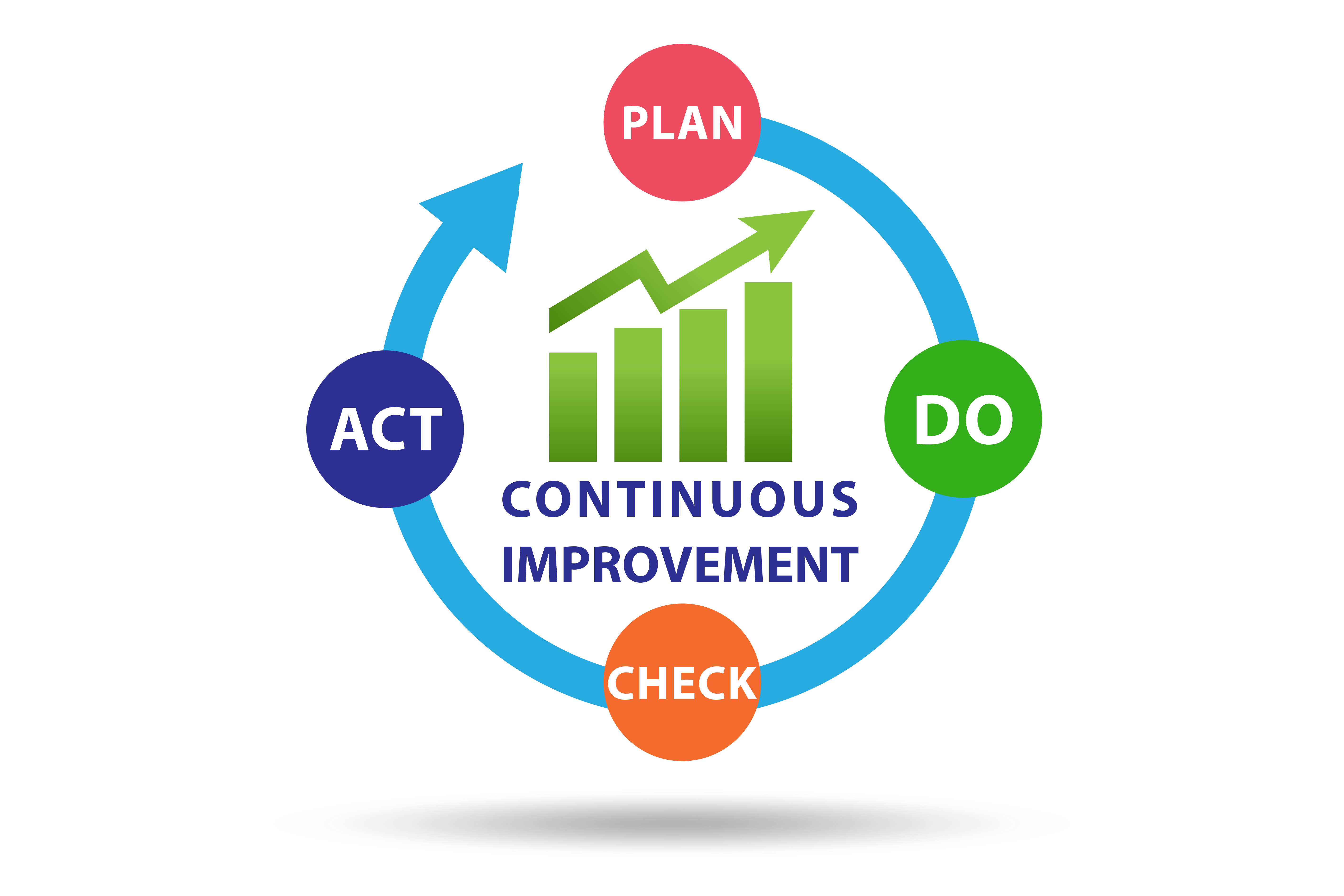
CQI is not a one-time project but a continuous cycle of planning, doing, checking, and acting. This cycle, often referred to as the PDCA (Plan-Do-Check-Act) cycle, ensures that improvements are made systematically and sustainably.
The PDCA Cycle in Continuous Quality Improvement
The PDCA cycle is a fundamental tool in Continuous Quality Improvement. It provides a structured approach to problem-solving and process improvement. Here’s a breakdown of each phase:
Plan
In the planning phase, the organization identifies the problem or area for improvement. This involves:
- Defining the problem clearly and concisely.
- Setting specific, measurable goals for improvement.
- Developing a plan of action to achieve these goals.
- Identifying the resources needed to implement the plan.
Do
The doing phase involves implementing the plan developed in the planning phase. This includes:
- Executing the planned actions.
- Collecting data to monitor the implementation process.
- Ensuring that all team members are involved and engaged.
Check
In the checking phase, the organization evaluates the results of the implemented plan. This involves:
- Analyzing the data collected during the doing phase.
- Comparing the results with the goals set in the planning phase.
- Identifying any deviations or issues that need to be addressed.
Act
The acting phase involves taking corrective actions based on the findings from the checking phase. This includes:
- Implementing changes to address any issues identified.
- Updating the plan as necessary.
- Documenting the lessons learned and sharing them with the team.
This cycle is repeated continuously, ensuring that improvements are made systematically and sustainably.
Benefits of Continuous Quality Improvement
Implementing Continuous Quality Improvement offers numerous benefits to organizations. Some of the key advantages include:
- Improved customer satisfaction: By focusing on customer needs and expectations, organizations can deliver products and services that meet or exceed customer expectations.
- Enhanced operational efficiency: Streamlining processes and eliminating waste can lead to significant cost savings and improved productivity.
- Increased employee engagement: Involving employees in the improvement process can boost morale, motivation, and job satisfaction.
- Better decision-making: Using data-driven approaches ensures that decisions are based on facts rather than assumptions.
- Competitive advantage: Organizations that continuously improve their processes and products are better positioned to compete in the market.
Implementing Continuous Quality Improvement
Implementing Continuous Quality Improvement requires a systematic approach. Here are the steps to get started:
Assess the Current State
Before implementing CQI, it is essential to assess the current state of the organization's processes. This involves:
- Identifying key processes and areas for improvement.
- Collecting data on current performance metrics.
- Analyzing the data to identify gaps and areas for improvement.
Develop a CQI Plan
Based on the assessment, develop a CQI plan that outlines the goals, strategies, and actions needed to achieve continuous improvement. This plan should include:
- Clear and measurable goals.
- Specific actions to achieve these goals.
- Resources and timelines for implementation.
- Metrics for measuring success.
Train and Engage Employees
Employee involvement is crucial for the success of CQI. Training and engaging employees in the improvement process can help ensure that everyone is on board and committed to the goals. This involves:
- Providing training on CQI principles and tools.
- Encouraging employee participation in improvement projects.
- Recognizing and rewarding employees for their contributions.
Implement and Monitor
Once the plan is in place, it is time to implement and monitor the improvements. This involves:
- Executing the planned actions.
- Collecting and analyzing data to monitor progress.
- Making adjustments as needed based on the data.
Review and Improve
Continuous improvement is an ongoing process. Regularly reviewing and improving the CQI plan ensures that the organization continues to make progress. This involves:
- Conducting periodic reviews of the CQI plan.
- Identifying new areas for improvement.
- Updating the plan as necessary.
📝 Note: It is important to involve all levels of the organization in the CQI process to ensure that improvements are sustainable and effective.
Tools for Continuous Quality Improvement
Several tools and techniques can be used to support Continuous Quality Improvement. Some of the most commonly used tools include:
Flowcharts
Flowcharts are visual representations of processes. They help identify bottlenecks, inefficiencies, and areas for improvement. Flowcharts can be used to:
- Map out current processes.
- Identify areas for improvement.
- Develop new processes.
Cause-and-Effect Diagrams
Cause-and-effect diagrams, also known as fishbone diagrams, help identify the root causes of problems. They can be used to:
- Analyze the causes of a problem.
- Identify potential solutions.
- Prioritize actions based on the root causes.
Control Charts
Control charts are used to monitor process performance over time. They help identify variations and trends in the data. Control charts can be used to:
- Monitor process performance.
- Identify trends and patterns.
- Make data-driven decisions.
Pareto Analysis
Pareto analysis is a statistical technique used to identify the most significant factors contributing to a problem. It can be used to:
- Prioritize actions based on their impact.
- Focus on the most critical issues.
- Allocate resources effectively.
5S Methodology
The 5S methodology is a workplace organization method that focuses on creating and maintaining an orderly and efficient workspace. The 5Ss are:
- Sort: Remove unnecessary items from the workspace.
- Set in Order: Organize the remaining items for easy access.
- Shine: Clean the workspace regularly.
- Standardize: Develop standards for maintaining the workspace.
- Sustain: Ensure that the standards are followed consistently.
Implementing the 5S methodology can help improve efficiency, reduce waste, and enhance overall quality.
Case Studies in Continuous Quality Improvement
Many organizations have successfully implemented Continuous Quality Improvement to achieve significant results. Here are a few case studies:
Toyota Production System
The Toyota Production System (TPS) is a well-known example of CQI. TPS focuses on eliminating waste, improving efficiency, and delivering high-quality products. Key principles of TPS include:
- Just-in-Time (JIT) production: Producing only what is needed, when it is needed.
- Jidoka: Building quality into the production process.
- Continuous improvement: Encouraging all employees to contribute to the improvement process.
TPS has helped Toyota become one of the most efficient and successful automotive manufacturers in the world.
Six Sigma at General Electric
General Electric (GE) implemented Six Sigma, a data-driven approach to eliminating defects and improving processes. Six Sigma focuses on reducing variability and improving quality. Key principles of Six Sigma include:
- Define: Identify the problem and the goals for improvement.
- Measure: Collect data to understand the current process.
- Analyze: Identify the root causes of the problem.
- Improve: Develop and implement solutions.
- Control: Monitor the process to ensure sustained improvement.
GE's implementation of Six Sigma resulted in significant cost savings and improved product quality.
Lean Manufacturing at Boeing
Boeing implemented Lean Manufacturing, a methodology focused on eliminating waste and improving efficiency. Lean Manufacturing principles include:
- Value: Identify what the customer values.
- Value Stream: Map the current process to identify waste.
- Flow: Create a smooth flow of work.
- Pull: Produce only what is needed, when it is needed.
- Perfection: Continuously improve the process.
Boeing's implementation of Lean Manufacturing helped reduce lead times, improve quality, and enhance customer satisfaction.
Challenges in Continuous Quality Improvement
While Continuous Quality Improvement offers numerous benefits, it also presents several challenges. Some of the common challenges include:
- Resistance to change: Employees may resist changes to established processes.
- Lack of resources: Implementing CQI requires time, money, and expertise.
- Inadequate training: Employees may lack the necessary skills and knowledge to contribute to the improvement process.
- Inconsistent leadership: Leadership support is crucial for the success of CQI.
- Data management: Collecting, analyzing, and interpreting data can be challenging.
To overcome these challenges, organizations need to:
- Communicate the benefits of CQI clearly and consistently.
- Provide adequate resources and training.
- Ensure strong leadership support.
- Develop robust data management systems.
By addressing these challenges proactively, organizations can ensure the success of their CQI initiatives.
Future Trends in Continuous Quality Improvement
The field of Continuous Quality Improvement is continually evolving. Some of the future trends in CQI include:
- Digital Transformation: Leveraging digital technologies to enhance process improvement.
- Data Analytics: Using advanced analytics to gain deeper insights into processes and performance.
- Artificial Intelligence: Applying AI to automate and optimize processes.
- Customer-Centric Approaches: Focusing on customer needs and expectations to drive improvement.
- Sustainability: Incorporating sustainability principles into CQI initiatives.
These trends are shaping the future of CQI and offering new opportunities for organizations to enhance their processes and deliver superior products and services.
In conclusion, Continuous Quality Improvement is a powerful approach that can help organizations achieve sustained success. By focusing on continuous monitoring and enhancement of processes, organizations can deliver superior products and services, improve customer satisfaction, and gain a competitive edge. The key to successful CQI lies in a systematic approach, strong leadership support, and a culture of continuous learning and improvement. By embracing CQI, organizations can navigate the challenges of today’s dynamic business environment and thrive in the long run.
Related Terms:
- continuous quality improvement meaning
- continuous quality improvement article
- continuous quality improvement principles
- continuous improvement
- continuous quality improvement cqi
- continuous quality improvement examples