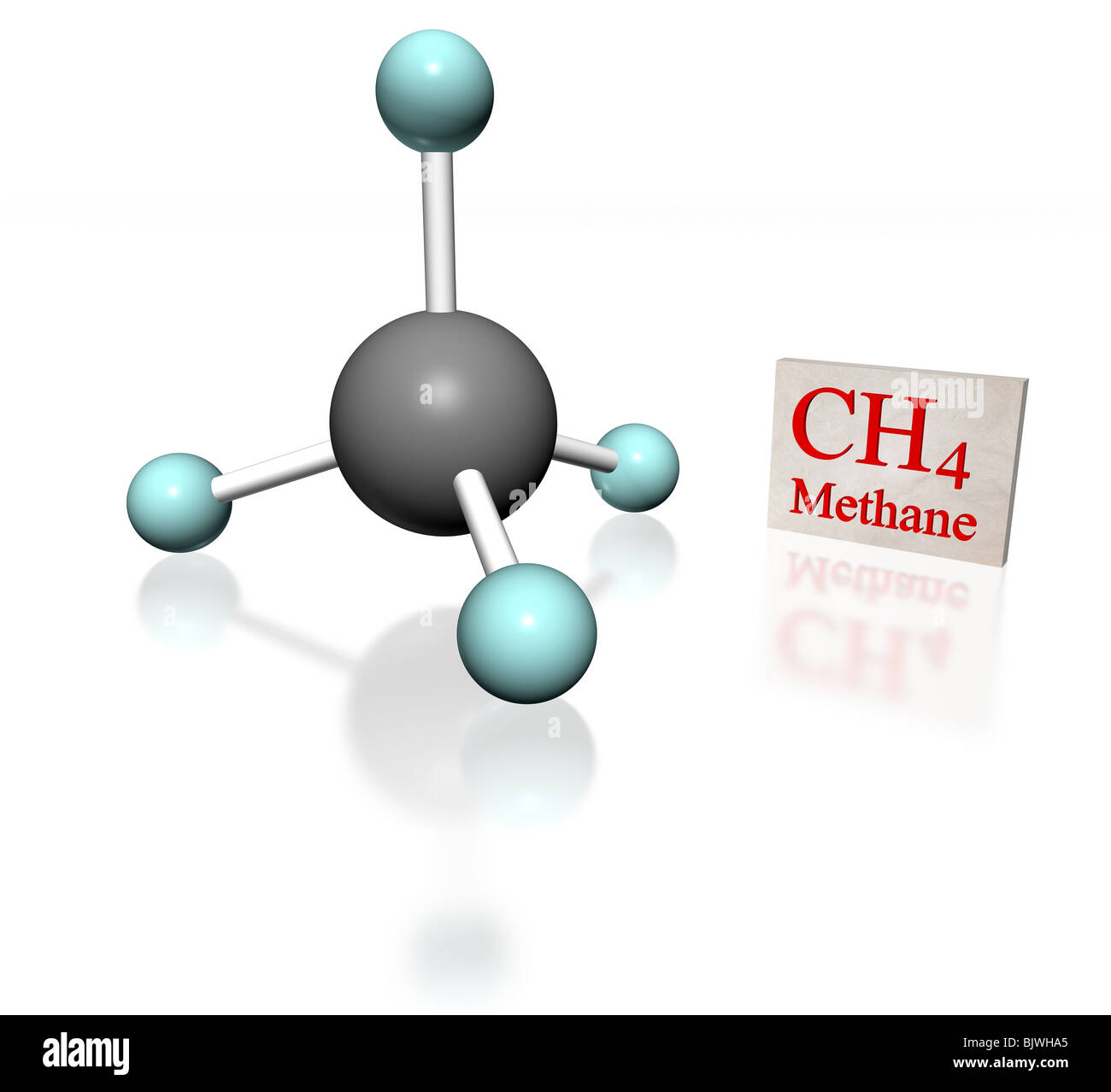

Understanding the CH4 molecular shape is fundamental to grasping the basics of molecular geometry and chemical bonding. Methane (CH4) is a simple yet crucial molecule in chemistry, serving as a building block for more complex hydrocarbons. This post delves into the structure, bonding, and properties of methane, providing a comprehensive overview of its CH4 molecular shape and its significance in chemistry.
Introduction to Methane (CH4)
Methane, with the chemical formula CH4, is the simplest hydrocarbon and the primary component of natural gas. It consists of one carbon atom bonded to four hydrogen atoms. The CH4 molecular shape is tetrahedral, which means the carbon atom is at the center, and the four hydrogen atoms are positioned at the vertices of a tetrahedron.
Bonding in Methane
To understand the CH4 molecular shape, it is essential to explore the bonding within the molecule. Methane forms covalent bonds, where electrons are shared between atoms. The carbon atom in methane has four valence electrons, and each hydrogen atom has one valence electron. The carbon atom shares one electron with each hydrogen atom, forming four single covalent bonds.
The Tetrahedral Geometry
The CH4 molecular shape is determined by the Valence Shell Electron Pair Repulsion (VSEPR) theory. According to VSEPR, electron pairs around a central atom repel each other and arrange themselves in a way that minimizes repulsion. In methane, the carbon atom has four bonding pairs of electrons, which repel each other equally. This results in a tetrahedral geometry, where the bond angles are approximately 109.5 degrees.
Properties of Methane
Methane’s CH4 molecular shape contributes to its unique properties. Some key properties include:
- Non-polar Nature: Due to its symmetrical tetrahedral structure, methane is a non-polar molecule. The dipole moments of the C-H bonds cancel each other out, making methane non-polar.
- Boiling Point: Methane has a very low boiling point of -161.5°C, which is a result of its weak intermolecular forces.
- Combustibility: Methane is highly flammable and burns in the presence of oxygen to produce carbon dioxide and water.
Applications of Methane
Methane’s CH4 molecular shape and properties make it valuable in various applications:
- Energy Source: Methane is a primary component of natural gas, which is used for heating, cooking, and generating electricity.
- Chemical Industry: Methane is a feedstock for producing various chemicals, including methanol, formaldehyde, and acetic acid.
- Transportation Fuel: Compressed natural gas (CNG) and liquefied natural gas (LNG) are used as alternative fuels for vehicles.
Environmental Impact
While methane is a valuable resource, it also has significant environmental impacts. Methane is a potent greenhouse gas, with a global warming potential much higher than carbon dioxide. Understanding the CH4 molecular shape and its properties is crucial for developing strategies to mitigate methane emissions and reduce its environmental impact.
Comparing Methane with Other Hydrocarbons
To better understand the CH4 molecular shape, it is helpful to compare methane with other hydrocarbons. Ethane (C2H6), for example, has a different molecular shape due to its additional carbon atom. Ethane has a staggered conformation, where the hydrogen atoms are positioned to minimize steric hindrance. This comparison highlights the importance of molecular geometry in determining the properties and behavior of hydrocarbons.
| Molecule | Molecular Shape | Bond Angles | Polarity |
|---|---|---|---|
| Methane (CH4) | Tetrahedral | 109.5 degrees | Non-polar |
| Ethane (C2H6) | Staggered | 109.5 degrees (C-H bonds) | Non-polar |
| Propane (C3H8) | Staggered | 109.5 degrees (C-H bonds) | Non-polar |
📝 Note: The table above compares the molecular shapes, bond angles, and polarity of methane, ethane, and propane. This comparison illustrates how the addition of carbon atoms affects the molecular geometry and properties of hydrocarbons.
Experimental Determination of CH4 Molecular Shape
The CH4 molecular shape can be determined experimentally using various techniques. One common method is X-ray crystallography, which provides detailed information about the arrangement of atoms in a molecule. Another technique is infrared spectroscopy, which can reveal the vibrational modes of a molecule and provide insights into its geometry.
Infrared spectroscopy is particularly useful for studying the CH4 molecular shape because it can detect the symmetric and asymmetric stretching vibrations of the C-H bonds. These vibrations are characteristic of the tetrahedral geometry and can be used to confirm the molecular shape of methane.
Additionally, nuclear magnetic resonance (NMR) spectroscopy can provide information about the chemical environment of the hydrogen atoms in methane. The NMR spectrum of methane shows a single peak, indicating that all hydrogen atoms are equivalent and confirming the tetrahedral geometry.
These experimental techniques are essential for validating theoretical predictions about the CH4 molecular shape and understanding the molecular structure of methane.
In summary, the CH4 molecular shape is a tetrahedral geometry, determined by the VSEPR theory and confirmed by experimental techniques. Understanding the bonding, properties, and applications of methane is crucial for various fields, including chemistry, energy, and environmental science. The unique properties of methane, resulting from its molecular shape, make it a valuable resource and a significant contributor to global energy and chemical industries.
Related Terms:
- ch4 3d structure
- co2 molecular shape
- ch4 molecular structure
- is ch4 tetrahedral
- ch4 molecular geometry chart
- ch4 electron geometry