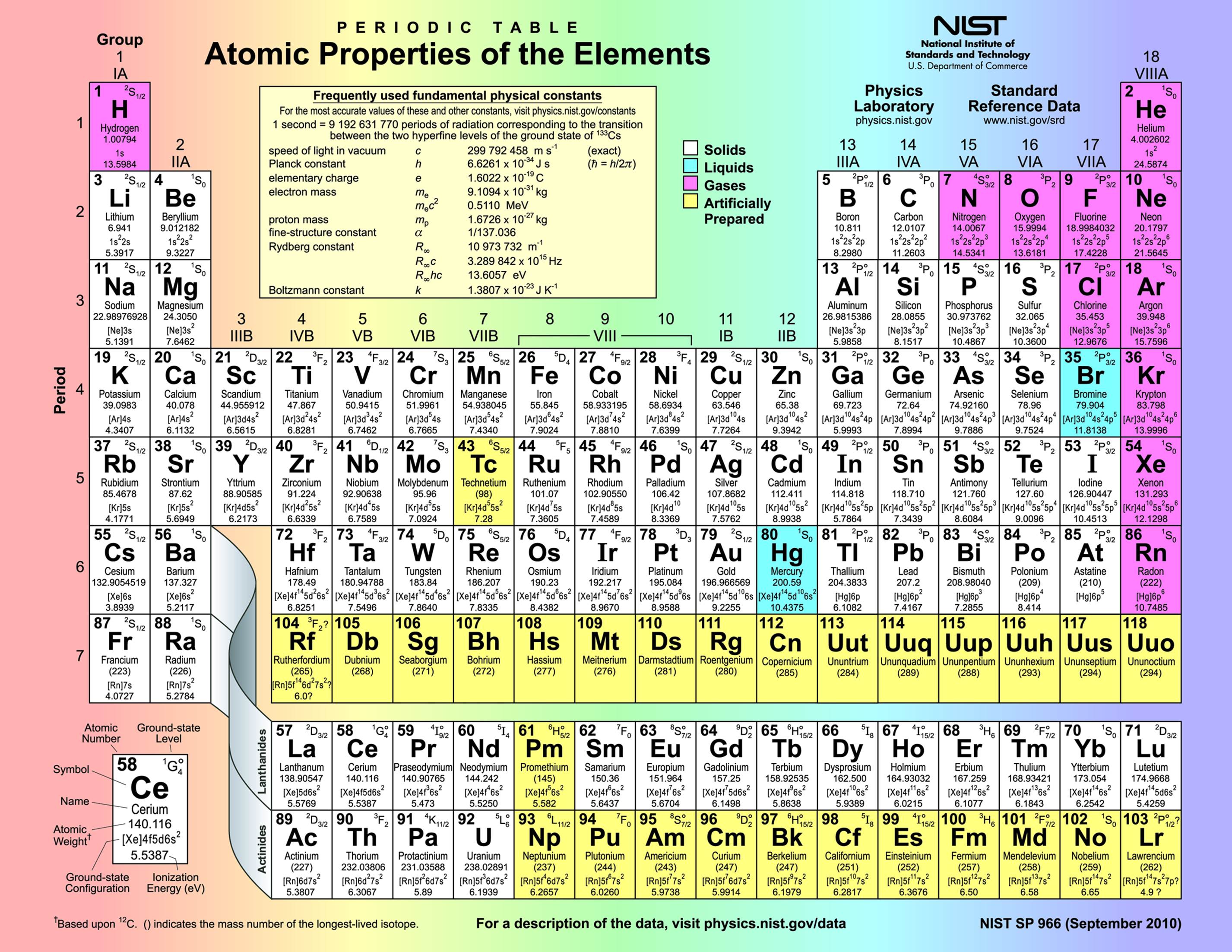

The study of chemistry is fundamentally rooted in the understanding of the periodic table, a systematic arrangement of chemical elements that has revolutionized the way we comprehend the properties and behaviors of these elements. One of the most powerful tools for deepening this understanding is the Annotated Periodic Table. This enhanced version of the periodic table provides detailed information about each element, making it an invaluable resource for students, educators, and professionals alike.
What is an Annotated Periodic Table?
An Annotated Periodic Table is a comprehensive version of the standard periodic table that includes additional information about each element. This information can range from basic properties like atomic number, atomic mass, and electron configuration to more advanced details such as electronegativity, ionization energy, and common isotopes. The annotations can also include historical context, discovery information, and practical applications of the elements.
Key Features of an Annotated Periodic Table
An Annotated Periodic Table typically includes the following key features:
- Element Symbol and Name: Each element is represented by its chemical symbol and full name.
- Atomic Number: The number of protons in the nucleus of an atom.
- Atomic Mass: The average mass of an atom, usually expressed in atomic mass units (amu).
- Electron Configuration: The arrangement of electrons in the shells and sub-shells of an atom.
- Group and Period: The element's position in the periodic table, which indicates its chemical properties and reactivity.
- Electronegativity: A measure of an atom's tendency to attract electrons towards itself.
- Ionization Energy: The energy required to remove an electron from an atom or ion.
- Common Isotopes: The naturally occurring isotopes of the element.
- Historical Context: Information about when and how the element was discovered.
- Practical Applications: The uses of the element in various industries and technologies.
Benefits of Using an Annotated Periodic Table
An Annotated Periodic Table offers several benefits over a standard periodic table:
- Enhanced Learning: The additional information helps students understand the properties and behaviors of elements more deeply.
- Quick Reference: It serves as a quick reference guide for educators and professionals who need detailed information about elements.
- Historical Insight: The historical context provides a richer understanding of the development of chemistry.
- Practical Applications: Knowing the practical uses of elements can inspire further study and innovation.
How to Use an Annotated Periodic Table
Using an Annotated Periodic Table effectively involves understanding how to interpret the additional information provided. Here are some steps to help you get the most out of it:
- Identify the Element: Start by locating the element you are interested in using its symbol or name.
- Review Basic Properties: Check the atomic number, atomic mass, and electron configuration to understand the element's basic structure.
- Analyze Chemical Properties: Look at the electronegativity and ionization energy to understand the element's reactivity and bonding behavior.
- Explore Isotopes: Review the common isotopes to understand the element's natural variations.
- Learn Historical Context: Read about the discovery and historical significance of the element.
- Discover Applications: Explore the practical uses of the element in various fields.
📚 Note: When using an Annotated Periodic Table, it's helpful to have a basic understanding of chemistry concepts such as atomic structure, electron configuration, and chemical bonding.
Examples of Annotated Periodic Tables
There are various types of Annotated Periodic Tables available, each designed to cater to different needs. Here are a few examples:
- Educational Annotated Periodic Tables: These are designed for students and include detailed explanations of chemical properties and concepts.
- Professional Annotated Periodic Tables: These are more concise and focus on practical applications and advanced properties.
- Historical Annotated Periodic Tables: These provide in-depth historical context and information about the discovery of elements.
Here is a simplified example of what an Annotated Periodic Table might look like for a few elements:
| Element Symbol | Element Name | Atomic Number | Atomic Mass | Electron Configuration | Group | Period | Electronegativity | Ionization Energy | Common Isotopes | Discovery | Applications |
|---|---|---|---|---|---|---|---|---|---|---|---|
| H | Hydrogen | 1 | 1.008 | 1s1 | 1 | 1 | 2.20 | 1312 kJ/mol | H-1, H-2 | 1766 by Henry Cavendish | Fuel, cooling agent |
| He | Helium | 2 | 4.0026 | 1s2 | 18 | 1 | N/A | 2372 kJ/mol | He-4 | 1868 by Pierre Janssen and Norman Lockyer | Balloon gas, cooling agent |
| Li | Lithium | 3 | 6.941 | [He] 2s1 | 1 | 2 | 0.98 | 520 kJ/mol | Li-6, Li-7 | 1817 by Johan August Arfwedson | Batteries, alloys |
Applications of Annotated Periodic Tables
An Annotated Periodic Table is a versatile tool with applications in various fields:
- Education: It is widely used in classrooms to teach chemistry concepts and properties of elements.
- Research: Scientists use it to understand the behavior of elements in chemical reactions and experiments.
- Industry: Professionals in fields such as materials science, pharmaceuticals, and engineering rely on it for practical applications.
- Historical Studies: Historians and chemists use it to study the development of chemistry and the discovery of elements.
An Annotated Periodic Table can also be used to create interactive learning tools, such as digital apps and online resources, that make chemistry more engaging and accessible.
For example, an interactive Annotated Periodic Table can include clickable elements that reveal detailed information, animations that show electron configurations, and quizzes that test knowledge. These tools can be particularly useful for visual learners and those who prefer hands-on learning experiences.
Creating Your Own Annotated Periodic Table
If you are interested in creating your own Annotated Periodic Table, here are some steps to guide you:
- Choose a Format: Decide whether you want a physical printout or a digital version.
- Gather Information: Collect data on the elements, including their properties, historical context, and applications.
- Design the Layout: Plan the layout of your table, ensuring that all important information is easily accessible.
- Add Annotations: Include detailed annotations for each element, using clear and concise language.
- Review and Edit: Check for accuracy and make any necessary edits.
📝 Note: When creating your own Annotated Periodic Table, consider the audience and their level of understanding. Tailor the information to meet their needs and interests.
Creating an Annotated Periodic Table can be a rewarding project that deepens your understanding of chemistry and provides a valuable resource for others. Whether you are a student, educator, or professional, this tool can enhance your learning and teaching experiences.
An Annotated Periodic Table is not just a reference tool; it is a gateway to understanding the fundamental building blocks of our universe. By exploring the properties, behaviors, and applications of elements, we gain a deeper appreciation for the complexity and beauty of chemistry. Whether you are a beginner or an expert, an Annotated Periodic Table offers a wealth of knowledge and insights that can inspire further exploration and discovery.
Related Terms:
- periodic table with charges
- aqa periodic table
- complete periodic table with everything
- annotated periodic table of elements
- interactive periodic table
- ptable.com periodic table