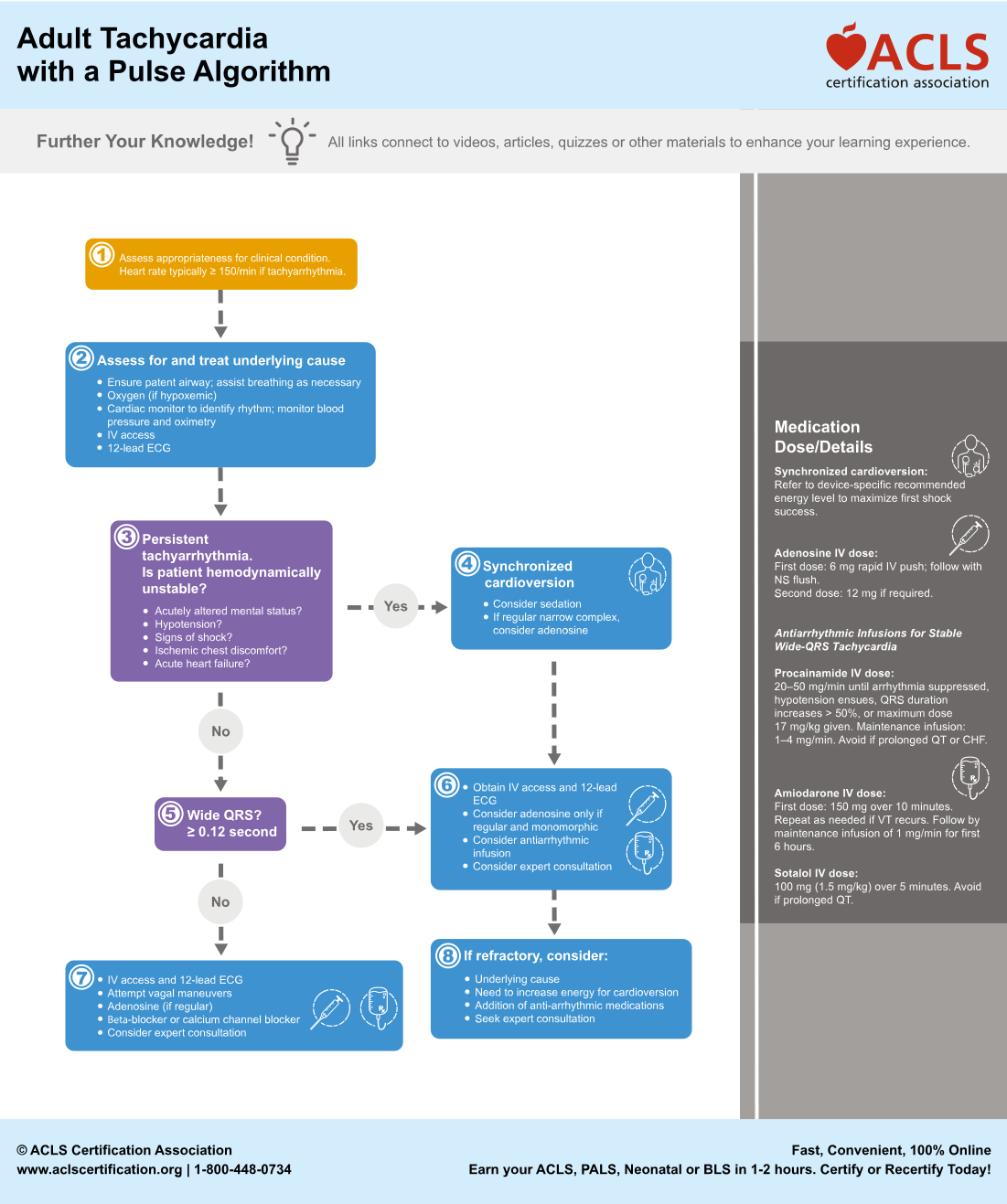

In the realm of emergency medicine and critical care, the management of tachycardias is a crucial skill. Tachycardia, characterized by a heart rate exceeding 100 beats per minute, can be life-threatening if not managed promptly and effectively. One of the most widely used tools for managing tachycardias is the ACLS Tachycardia Algorithm. This algorithm provides a structured approach to diagnosing and treating various types of tachycardias, ensuring that healthcare providers can act swiftly and decisively in emergency situations.
Understanding Tachycardia
Tachycardia can be broadly categorized into two types: narrow-complex and wide-complex tachycardias. Narrow-complex tachycardias have a QRS duration of less than 0.12 seconds and are typically supraventricular in origin. Wide-complex tachycardias, on the other hand, have a QRS duration of 0.12 seconds or more and can be either ventricular or supraventricular with aberrant conduction.
The ACLS Tachycardia Algorithm
The ACLS Tachycardia Algorithm is designed to help healthcare providers quickly identify the type of tachycardia and initiate appropriate treatment. The algorithm is divided into two main branches: one for stable patients and another for unstable patients. The key steps in the algorithm are as follows:
Assessment of Stability
The first step in the ACLS Tachycardia Algorithm is to assess the patient’s stability. Stability is determined by the presence or absence of signs of hemodynamic compromise, such as altered mental status, chest pain, shortness of breath, or hypotension. If the patient is unstable, immediate synchronized cardioversion is indicated.
Stable Patients with Narrow-Complex Tachycardia
For stable patients with narrow-complex tachycardia, the algorithm recommends the following steps:
- Administer adenosine 6 mg IV push, followed by a rapid saline flush. If the rhythm does not convert, administer a second dose of 12 mg IV push.
- If adenosine is ineffective or contraindicated, consider other medications such as diltiazem or verapamil.
- If the patient remains in tachycardia, consider electrical cardioversion.
Stable Patients with Wide-Complex Tachycardia
For stable patients with wide-complex tachycardia, the algorithm suggests the following approach:
- Administer amiodarone 150 mg IV over 10 minutes, followed by an infusion of 1 mg/min for 6 hours, then 0.5 mg/min for 18 hours.
- If amiodarone is ineffective or contraindicated, consider procainamide or sotalol.
- If the patient remains in tachycardia, consider electrical cardioversion.
Unstable Patients
For unstable patients with any type of tachycardia, the ACLS Tachycardia Algorithm recommends immediate synchronized cardioversion. The initial energy level for cardioversion is typically 50-100 Joules for monophasic defibrillators and 20-50 Joules for biphasic defibrillators. If the initial shock is unsuccessful, subsequent shocks can be delivered at higher energy levels.
Medications Used in the ACLS Tachycardia Algorithm
The ACLS Tachycardia Algorithm utilizes several medications to manage tachycardias. These medications are chosen based on their efficacy and safety profiles. Some of the commonly used medications include:
Adenosine
Adenosine is a rapid-acting medication used to terminate supraventricular tachycardias, particularly those involving reentry circuits. It has a short half-life and is administered intravenously. The typical dosing regimen is 6 mg IV push, followed by a rapid saline flush. If the rhythm does not convert, a second dose of 12 mg IV push can be administered.
Amiodarone
Amiodarone is a potent antiarrhythmic agent used to treat both narrow-complex and wide-complex tachycardias. It is administered intravenously and has a long half-life, making it suitable for both acute and chronic management of tachycardias. The typical dosing regimen is 150 mg IV over 10 minutes, followed by an infusion of 1 mg/min for 6 hours, then 0.5 mg/min for 18 hours.
Diltiazem and Verapamil
Diltiazem and verapamil are calcium channel blockers used to treat supraventricular tachycardias. They are particularly effective in patients with atrial fibrillation or atrial flutter. The typical dosing regimen for diltiazem is 0.25 mg/kg IV over 2 minutes, followed by an infusion of 5-15 mg/hour. For verapamil, the typical dosing regimen is 2.5-5 mg IV over 2 minutes, followed by an infusion of 5-10 mg/hour.
Procainamide
Procainamide is an antiarrhythmic agent used to treat both narrow-complex and wide-complex tachycardias. It is administered intravenously and has a rapid onset of action. The typical dosing regimen is 20 mg/min IV until the arrhythmia is suppressed, hypotension occurs, or a total dose of 17 mg/kg is reached.
Special Considerations
While the ACLS Tachycardia Algorithm provides a structured approach to managing tachycardias, there are several special considerations that healthcare providers should keep in mind. These include:
Pregnancy
Managing tachycardias in pregnant patients requires special consideration due to the potential effects of medications on the fetus. Adenosine, diltiazem, and verapamil are generally considered safe during pregnancy, while amiodarone and procainamide should be used with caution.
Pediatric Patients
Pediatric patients may require different dosing regimens and considerations compared to adults. The ACLS Tachycardia Algorithm for pediatric patients is similar to that for adults, but the dosing of medications is adjusted based on the child’s weight and age.
Concomitant Medical Conditions
Patients with concomitant medical conditions, such as heart failure or liver disease, may require adjustments to the ACLS Tachycardia Algorithm. For example, patients with heart failure may be more sensitive to the negative inotropic effects of certain medications, while patients with liver disease may have impaired metabolism of these medications.
Summary of the ACLS Tachycardia Algorithm
The ACLS Tachycardia Algorithm is a comprehensive tool for managing tachycardias in emergency situations. The algorithm provides a structured approach to assessing the patient’s stability, identifying the type of tachycardia, and initiating appropriate treatment. The key steps in the algorithm include:
| Step | Action |
|---|---|
| 1 | Assess the patient's stability |
| 2 | For unstable patients, perform immediate synchronized cardioversion |
| 3 | For stable patients with narrow-complex tachycardia, administer adenosine, diltiazem, or verapamil |
| 4 | For stable patients with wide-complex tachycardia, administer amiodarone, procainamide, or sotalol |
| 5 | If medications are ineffective, consider electrical cardioversion |
📝 Note: The ACLS Tachycardia Algorithm is a guideline and should be adapted to the individual needs of the patient. Healthcare providers should be familiar with the algorithm and practice its steps regularly to ensure proficiency.
In conclusion, the ACLS Tachycardia Algorithm is an essential tool for managing tachycardias in emergency situations. By providing a structured approach to assessing the patient’s stability, identifying the type of tachycardia, and initiating appropriate treatment, the algorithm helps healthcare providers act swiftly and decisively. Understanding the algorithm and its components is crucial for any healthcare provider involved in emergency medicine or critical care. Regular practice and familiarity with the algorithm can significantly improve patient outcomes and save lives.
Related Terms:
- acls acs algorithm
- acls bradycardia algorithm
- acls rosc algorithm
- acls tachycardia algorithm 2025
- acls unstable tachycardia algorithm
- acls bradycardia algorithm 2025