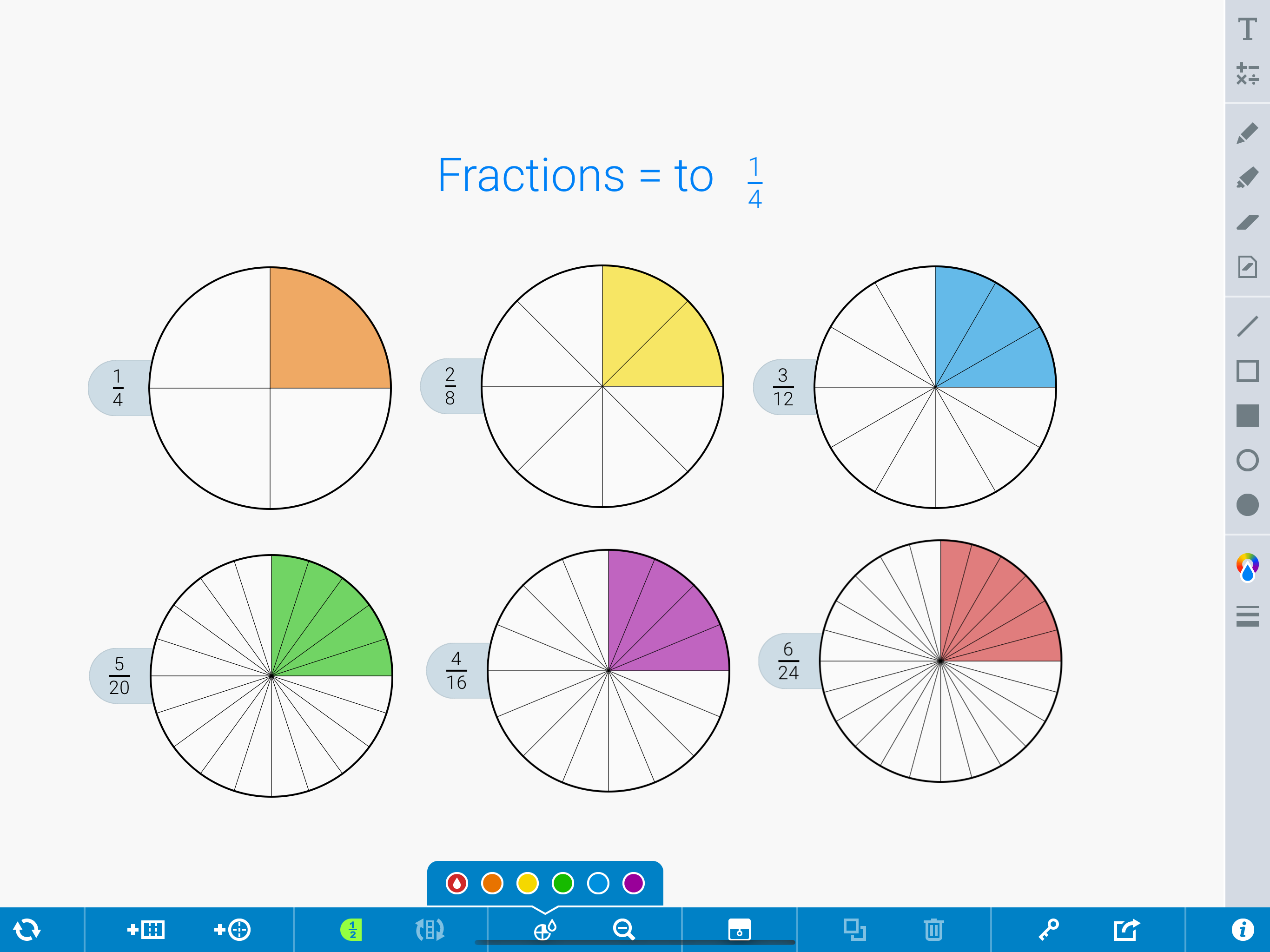

Mathematics is a universal language that helps us understand the world around us. One of the fundamental concepts in mathematics is fractions, which represent parts of a whole. Today, we will delve into the world of fractions, specifically focusing on how to add fractions like 1/4 + 1/3. Understanding how to add fractions is crucial for various applications, from everyday tasks to advanced mathematical problems.
Understanding Fractions
Before we dive into adding fractions, let’s briefly review what fractions are. A fraction consists of a numerator (the top number) and a denominator (the bottom number). The numerator represents the number of parts you have, while the denominator represents the total number of parts that make up the whole.
Adding Fractions with the Same Denominator
Adding fractions with the same denominator is straightforward. You simply add the numerators and keep the denominator the same. For example, if you have 1⁄4 + 1⁄4, you add the numerators (1 + 1) and keep the denominator (4), resulting in 2⁄4. This can be simplified to 1⁄2.
Adding Fractions with Different Denominators
Adding fractions with different denominators is a bit more complex. You need to find a common denominator before you can add the fractions. Let’s use the example of 1⁄4 + 1⁄3 to illustrate this process.
Finding a Common Denominator
The first step is to find a common denominator. The denominators here are 4 and 3. The smallest number that both 4 and 3 can divide into without leaving a remainder is 12. This is the least common multiple (LCM) of 4 and 3.
Converting Fractions
Next, convert each fraction to an equivalent fraction with the common denominator. To do this, multiply both the numerator and the denominator of each fraction by the appropriate factor to get the common denominator.
For 1⁄4, multiply both the numerator and the denominator by 3 to get 3⁄12.
For 1⁄3, multiply both the numerator and the denominator by 4 to get 4⁄12.
Adding the Fractions
Now that both fractions have the same denominator, you can add them:
3⁄12 + 4⁄12 = 7⁄12
Simplifying the Result
In this case, 7⁄12 is already in its simplest form because 7 and 12 have no common factors other than 1. However, if the result were not in its simplest form, you would divide both the numerator and the denominator by their greatest common divisor (GCD).
Practical Applications of Adding Fractions
Understanding how to add fractions is essential in various real-life situations. Here are a few examples:
- Cooking and Baking: Recipes often require adding fractions of ingredients. For example, if a recipe calls for 1⁄4 cup of sugar and you need to add 1⁄3 cup more, you would use the method described above to determine the total amount of sugar needed.
- Construction and Measurement: In construction, fractions are used to measure materials. Adding fractions of measurements is crucial for accurate construction.
- Finance and Budgeting: In personal finance, fractions are used to calculate interest rates, budget allocations, and other financial metrics. Adding fractions helps in managing budgets and investments effectively.
Common Mistakes to Avoid
When adding fractions, especially with different denominators, it’s easy to make mistakes. Here are some common pitfalls to avoid:
- Not Finding a Common Denominator: Always ensure you have a common denominator before adding the fractions.
- Incorrect Conversion: Double-check your conversion of fractions to the common denominator. Ensure both the numerator and the denominator are multiplied by the correct factor.
- Forgetting to Simplify: After adding the fractions, simplify the result if necessary. This ensures your answer is in its simplest form.
📝 Note: Always double-check your work to avoid these common mistakes. Practice with different fractions to build your confidence and accuracy.
Examples of Adding Fractions
Let’s go through a few more examples to solidify your understanding of adding fractions.
Example 1: 2⁄5 + 3⁄10
Find a common denominator for 5 and 10, which is 10.
Convert 2⁄5 to 4⁄10 by multiplying both the numerator and the denominator by 2.
Now add the fractions: 4⁄10 + 3⁄10 = 7⁄10.
Example 2: 3⁄8 + 1⁄6
Find a common denominator for 8 and 6, which is 24.
Convert 3⁄8 to 9⁄24 by multiplying both the numerator and the denominator by 3.
Convert 1⁄6 to 4⁄24 by multiplying both the numerator and the denominator by 4.
Now add the fractions: 9⁄24 + 4⁄24 = 13⁄24.
Example 3: 5⁄7 + 2⁄9
Find a common denominator for 7 and 9, which is 63.
Convert 5⁄7 to 45⁄63 by multiplying both the numerator and the denominator by 9.
Convert 2⁄9 to 14⁄63 by multiplying both the numerator and the denominator by 7.
Now add the fractions: 45⁄63 + 14⁄63 = 59⁄63.
Adding Mixed Numbers
Mixed numbers are whole numbers combined with fractions. Adding mixed numbers involves adding the whole numbers and the fractions separately. Let’s look at an example:
Example: 1 1⁄4 + 2 1⁄3
First, add the whole numbers: 1 + 2 = 3.
Next, add the fractions: 1⁄4 + 1⁄3. We already know from our earlier example that this equals 7⁄12.
Combine the whole number and the fraction: 3 + 7⁄12 = 3 7⁄12.
Adding Improper Fractions
Improper fractions are fractions where the numerator is greater than or equal to the denominator. Adding improper fractions follows the same steps as adding regular fractions. Let’s look at an example:
Example: 5⁄4 + 7⁄3
Find a common denominator for 4 and 3, which is 12.
Convert 5⁄4 to 15⁄12 by multiplying both the numerator and the denominator by 3.
Convert 7⁄3 to 28⁄12 by multiplying both the numerator and the denominator by 4.
Now add the fractions: 15⁄12 + 28⁄12 = 43⁄12.
This result is an improper fraction. If needed, you can convert it to a mixed number: 43/12 = 3 7/12.
Visual Representation of Adding Fractions
Visual aids can be very helpful in understanding how to add fractions. Below is a table that shows the visual representation of adding 1⁄4 + 1⁄3.
| Fraction | Visual Representation |
|---|---|
| 1/4 |  |
| 1/3 |  |
| 1/4 + 1/3 | |
| 7/12 | |
This visual representation helps to see how the fractions combine to form a new fraction.
Adding fractions is a fundamental skill that opens the door to more complex mathematical concepts. By mastering the techniques of finding a common denominator, converting fractions, and simplifying results, you can tackle a wide range of mathematical problems with confidence. Whether you’re solving everyday problems or delving into advanced mathematics, understanding how to add fractions like 1⁄4 + 1⁄3 is a crucial step in your mathematical journey.
Related Terms:
- fraction calculator online free
- 1 4 3 simplified
- how to calculate fractions
- 1 4 3 answer
- how to find fractions
- fraction calculator